
• HOME
  • Container Gardens
  • Houseplants
  • Edible Gardening
  • Garden Design
  • Caring for Your Yard
  • Flowers
  • Pest & Problem Fixes
  • Trees, Shrubs & Vines
  • Landscaping
  • Garden Plans
  • Gardening Routine
  • Terms of Use
  • About Us
  • Privacy Policy
quasarshadow.topquasarshadow.top
  • HOME
  • Container Gardens
  • Houseplants
  • Edible Gardening
  • Garden Design
  • Caring for Your Yard
  • Flowers
  • Pest & Problem Fixes
  • Trees, Shrubs & Vines
  • Landscaping
  • Garden Plans
  • Gardening Routine
quasarshadow.top quasarshadow.top
quasarshadow.top » Caring for Your Yard » How to Make a Mowing Strip
Caring for Your Yard

How to Make a Mowing Strip

21.2K
2.1K
909
How to Make a Mowing Strip

Leave a 6- to 12-inch-wide mowing strip between the edge of your beds and borders and the lawn. It will help you save time and effort in the garden.

01 of 07

Step 1: Dig a Trench

Mark the area for your mowing strip lawn edging by using flour or powdered chalk. We recommend that it is between 6 and 12 inches wide. Then use a spade to cut through any sod and remove it, excavating a 6- to 8-inch-deep trench.

02 of 07

Gather Materials

A paved strip between grass and beds or borders means you can mow your lawn without worry of damaging plants or trimming afterward. The ground-level strip enables the blade to cut freely. And making it 12 inches wide provides a stable path to walk on or a dry perch for while working in the bed.

Rubble, a mix of irregular fieldstones, and broken concrete chunks provide ideal materials for creating a mowing strip. There's likely a shattered sidewalk or driveway ready for recycling and perhaps free for hauling. Road-base gravel is a rough-edge, unrinsed material that also works well as a base for the mow strip. The quantity of materials necessary for the project depends on the length of your bed and the width of the strip.

Here's a list of what you'll need:

  • Waterproof work gloves
  • Flour or powdered chalk
  • Coarse sand
  • Road-base gravel
  • Rubble (with at least one flat side) or fieldstones
  • Quick-setting concrete mix
  • Hand brush or broom
  • Garden hose with spray attachment
  • Decorative items, such as colored sea glass, sparkly rocks, or other treasures
  • Sheet plastic or burlap
03 of 07

Step 2: Start Filling Trench

Cover the bottom of the trench with a 1- to 2-inch-deep layer of sand. Top the sand layer with a 1- to 2-inch-deep layer of road-base gravel. Don't worry about leveling the layers yet.

04 of 07

Step 3: Add Larger Stones

Position the rubble or fieldstones at ground level with flat sides up. Add gravel under pieces as needed to create a level surface. Leave 1-inch-wide or larger gaps between the pieces. Sprinkle gravel into the gaps until they're mostly filled and the area is level.

05 of 07

Step 4: Add Concrete Mix

Use a flexible scoop, such as a plastic yogurt cup, to sprinkle concrete mix into the gaps. Brush any excess off the adjacent rubble.

06 of 07

Step 5: Wet Concrete

Attach a spray nozzle to the garden hose and gently sprinkle the installation with water just until the concrete mix is saturated. Add dry concrete mix to level any areas and saturate.

07 of 07

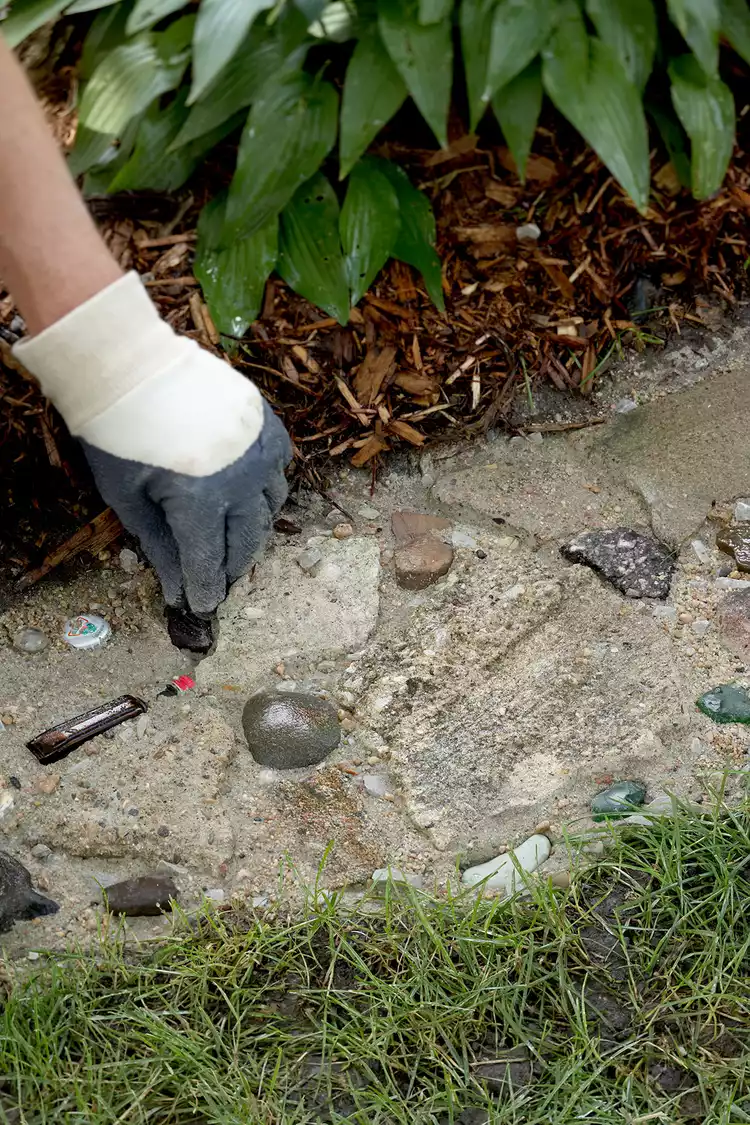
Step 6: Add Finishing Touches

Concrete sets within 15 minutes, so work quickly to add finishing touches, tucking decorative items into the wet concrete. Cover the finished installation with a sheet of plastic or burlap to keep the concrete damp while it cures. Wait two days before walking on it.

Related Posts

38K
1.1K
501

Can You Eat Ornamental Sweet Potato Vines? Here’s What to Know

34.1K
3.1K
1.2K

3 Potted Plant Arrangement Ideas for a Gorgeous Patio Garden

43.4K
3K
1.5K

9 Dish Garden Designs That Will Bring the Outdoors In

11.3K
226
63

Top Butterfly Container Garden Ideas

46.9K
1.4K
407

26 Tiny Plants Perfect for Miniature Landscaping

46.4K
1.9K
834

Best Plants for Mississippi Landscapes

11.5K
230
94

Brown Spots on Your Lawn? 7 Causes and How to Fix Them

33.8K
676
317

7 Weeding Mistakes That Make Gardening Much Harder

19.7K
1.4K
538

18 Clever Ways to Use Fallen Twigs and Sticks in Your Garden

31.5K
630
226

Grow Dusty Miller With This Complete Guide

14.2K
284
82

How to Plant and Grow Paperwhites

48.9K
2K
958

How to Plant and Grow Sweet Potato Vine

28.9K
2K
972

15 Flowers That Don't Need to Be Deadheaded

23.8K
1.2K
320

6 Common Houseplant Care Mistakes You're Probably Making, And How to Avoid Them

15.6K
1.3K
150

How to Get Rid of Cucumber Beetles on Your Plants

25.6K
511
137

How to Get Rid of Creeping Charlie and Keep It From Coming Back

8.2K
411
184

5 Pet-Friendly Weed Killer Options for a Safe and Beautiful Yard

11.5K
1K
486

10 Best Parsley Companion Plants to Grow Together

45.1K
901
243

Add Easy-Care Color with This Small Space, Drought-Resistant Garden Plan

25.4K
1K
497

How to Make a Pallet Potting Bench for Your Gardening Projects

Can You Eat Ornamental Sweet Potato Vines? Here’s What to Know
3 Potted Plant Arrangement Ideas for a Gorgeous Patio Garden
9 Dish Garden Designs That Will Bring the Outdoors In
Top Butterfly Container Garden Ideas
26 Tiny Plants Perfect for Miniature Landscaping
Best Plants for Mississippi Landscapes
Brown Spots on Your Lawn? 7 Causes and How to Fix Them
7 Weeding Mistakes That Make Gardening Much Harder
18 Clever Ways to Use Fallen Twigs and Sticks in Your Garden
Grow Dusty Miller With This Complete Guide
How to Plant and Grow Paperwhites
How to Plant and Grow Sweet Potato Vine
15 Flowers That Don't Need to Be Deadheaded
6 Common Houseplant Care Mistakes You're Probably Making, And How to Avoid Them
How to Get Rid of Cucumber Beetles on Your Plants
How to Get Rid of Creeping Charlie and Keep It From Coming Back
5 Pet-Friendly Weed Killer Options for a Safe and Beautiful Yard
10 Best Parsley Companion Plants to Grow Together
Add Easy-Care Color with This Small Space, Drought-Resistant Garden Plan
How to Make a Pallet Potting Bench for Your Gardening Projects
quasarshadow.top ©2026
  • Terms of Use
  • About Us
  • Privacy Policy