
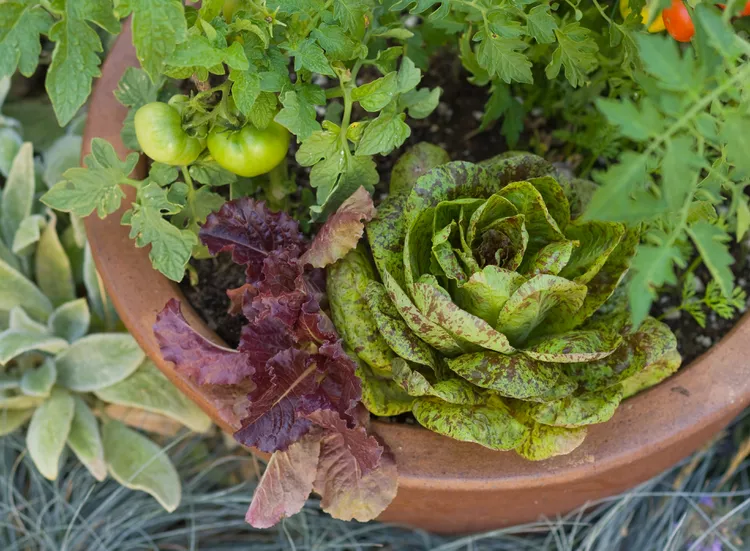
Almost any type of lettuce can grow in containers, which is convenient for urban or small-space gardeners who don’t have room for in-ground gardens. Lettuces are perfect for containers placed on decks, patios, balconies, and porches. Growing in containers also gives you control over the soil, light, and water conditions. Whether you’re a newbie gardener or a pro with plenty of experience growing veggies, these expert tips will help you grow lettuce in containers.
1. Match the Lettuce Type to the Container
Ideally, you want a wide, shallow container to grow lettuce. Leaf lettuce can grow in smaller containers than head lettuce. For leaf lettuce, you need a container at least 12 inches wide and 6 inches deep. To grow head lettuce, you need a container that’s 16 inches wide and 12 to 16 inches deep.
Lettuce has shallow roots so you don’t need a deep container to grow it. However, a deeper container helps the roots hold moisture longer, so you don’t have to water as frequently.
2. For a Faster Harvest, Grow Leaf Lettuce
You can clip off leaves of leaf lettuce as you need them, but you have to wait for a head of lettuce to grow before you can make it into a salad. Leaf lettuce is ready to eat at any size, and you can pick baby leaves for tender salads.
3. Don’t Plant Lettuce Seeds too Deep
Lettuce seeds are tiny and delicate. Plant them just ¼ to ½ inch deep, or they will struggle to reach the surface and grow. The best way to plant lettuce seeds is to sprinkle them over the top of the soil in the container and cover them with a fine layer of potting soil.
Start with lettuce transplants for a speedier harvest. Because lettuce grows fast, you can begin snipping leaves to eat as soon as three weeks after planting.
4. Choose the Right Soil
Lettuce thrives in nitrogen-rich, well-draining soil. Use a pre-mixed potting soil designed specifically for container gardening or mix up your own potting mix. Compost is the magic ingredient for growing lettuce in containers. It adds nutrients, encourages lettuce to produce more foliage, and discourages pests and diseases. Mix in a scoop or two of compost before planting your lettuce.
5. Plant Lettuce When Temperatures Are Mild
Lettuce is a cool-season crop that grows best in the spring or fall. A hard freeze kills lettuce, and hot weather (over 75°F) causes it to bolt or go to seed. Once lettuce bolts, it stops putting energy into growing leaves—the part of the plant we typically eat—and instead makes flowers and seeds.
6. Water Regularly
Lettuce needs consistent moisture to have tender, sweet leaves. Too little water can result in tough, bitter lettuce. Water whenever the top inch of soil dries out.
7. Fertilize Every Other Week
Feed your lettuce with a water-soluble fertilizer every two weeks. Fertilizer provides the plant with the nitrogen it needs to keep producing tender leaves. However, there can be too much of a good thing, so always follow label directions for your fertilizer of choice or you might end up burning your plants.
8. Harvest Leaf Lettuce Every Few Days
Frequently harvesting lettuce encourages the plant to keep growing new leaves. Use sharp scissors to cut the largest, oldest leaves from the plants. Pick lettuce leaves in the morning when they have the highest water content.
9. Get the Light Right
Lettuce needs at least five to six hours of sun a day, but unlike other veggies, it can tolerate some shade. It’s a delicate, leafy crop, so the afternoon sun can wilt it. The beauty of container gardening is that you can move your little lettuce garden to a spot where it gets the perfect amount of light.
10. Add Companion Plants
Companion plants help lettuce grow better by repelling damaging insects. Plant chives, cilantro, and garlic in the same container as lettuce, and they act as a barrier plant against aphids. Mint repels slugs. You also benefit from fresh herbs to go along with your fresh lettuce.
11. Look Out for Pests
Aphids and slugs are lettuce’s top enemies. Check your plants at least once a week for these lettuce-eating pests or signs they’ve been chewing on your crop. If you spot them, spray the plants with neem oil to get rid of aphids, and pluck slugs off your plants by hand, then drop them in a bucket of soapy water.
12. Keep Planting New Lettuce
For a continuous supply of fresh lettuce throughout the growing season, plant new seeds or new transplants every three to four weeks to replace harvested and older plants. Do this by planting new containers or pulling out tired, spent lettuce plants and replacing them with new ones.