
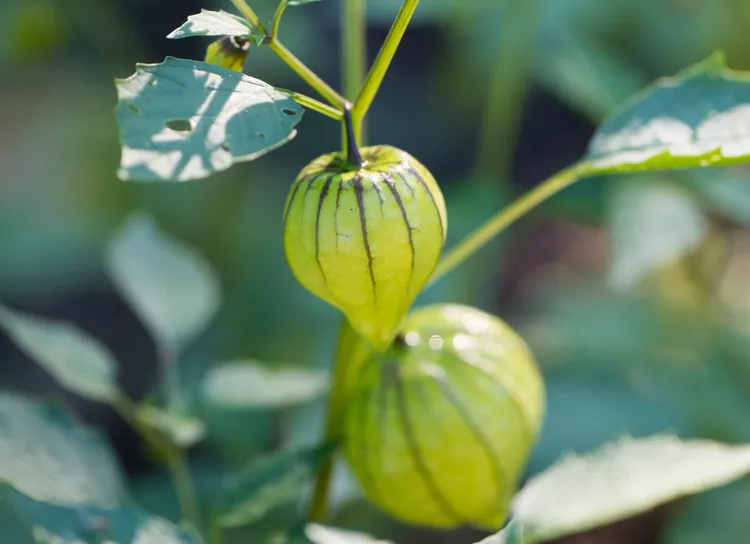
Tomatillos (Physalis philadelphica syn. Physalis ixora) are part of the nightshade family, like tomatoes and eggplants, but they are more closely related to the Chinese lantern plant. However, tomatillo plants produce round edible fruits—usually 2 inches or smaller in diameter—that are covered by a papery husk, known as a calyx. Most tomatillo fruits are light green, but some varieties can also be purple or yellow when they ripen. Tomatillos are the star of the show for salsa verde, and are also used for soups, salsas, chilis, salad dressings, and grilling meats. Here's how to grow tomatillos in your garden.
Tomatillo Overview
| Genus Name | Physalis philadelphica syn. Physalis ixora |
| Common Name | Tomatillo |
| Additional Common Names | Mexican husk tomato, husk cherry, Mexican ground cherry, jamberries |
| Plant Type | Annual, Perennial |
| Light | Sun |
| Height | 3 to 4 feet |
| Width | 3 to 4 feet |
| Flower Color | Purple, White, Yellow |
| Foliage Color | Blue/Green |
| Zones | 10, 9 |
| Propagation | Seed |
Where to Plant Tomatillos
Plant perennial tomatillos in an area that receives lots of sunshine. You can plant them directly in the soil, raised beds, or a big container. These fast-growing plants like well-draining soil with plenty of compost mixed in.
Except for the ripe fruit, all parts of the tomatillo are toxic when consumed.
How and When to Plant Tomatillos
Sow tomatillo seeds indoors six to eight weeks before planting time. Transplant seedlings outdoors after soil temperatures are around 60°F. Tomatillos take about three months to grow, so plan accordingly. Plant at least two tomatillo plants near each other to ensure pollination. These plants need ample room and grow; plan for the mature plant to reach about 3-4 feet tall and wide.
Tomatillo Care Tips
Tomatillos are low-maintenance plants as long as their basic needs are met.
Light
Tomatillos need full sun, so plant them in a south or west-facing area for maximum sunlight daily. Choose an area that receives at least six hours of direct sunlight each day.
Soil and Water
Tomatillos grow best in well-draining soil with a pH of 6.0 to 7.0. Amending soil with organic matter, such as compost, adds essential nutrients and creates a more loamy soil.
Water tomatillos at the base where the stem protrudes from the soil line. Avoid overhead watering so the leaves don't get wet, which can encourage plant disease problems. Tomatillo plants need around 1 to 1.5 inches of water each week.
Temperature and Humidity
Tomatillos do best when temperatures are around 70°F or higher during the day, and don't drop below 55°F at night. To ensure success, plant your seeds or transplant seedlings after the last frost. Tomatillos are drought-tolerant and enjoy heat but grow better with a steady supply of moisture.
Fertilizer
Fertilize the seedlings before planting them in the garden with a liquid fertilizer at half strength, following the product directions. After they are transplanted, sprinkle one tablespoon of 21-0-0 fertilizer near each plant monthly. Don't overfertilize tomatillos because this delays fruit production and causes leaves to overgrow.
Pruning
Pruning tomatillos isn't necessary. You'll likely need to stake tomatillo plants like you do tomato plants.
Pests and Problems
Tomatillos are hardy and resilient plants. Powdery mildew, a fungal disease, can spread and cover the foliage, and overwatering can lead to root rot. Aphids and flea beetles are also common pests for tomatillo plants. Flea beetles munch on the leaves, leaving tiny holes. Aphids leave secretions, so check leaves for wet, shiny, or sticky residue.
How to Propagate Tomatillos
The most common way to propagate tomatillos is by seeds. When tomatillo plants finish their life cycle and go to seed, gather the seeds, dry them, and store them in a glass jar in a dry, cool, and dark place. Start the seeds indoors for the following season, allowing six to eight weeks for transplants to be ready to go into the garden when the weather warms.
Harvesting Tomatillos
Tomatillos are ready for harvest when the fruit fills in the husk. Sometimes, the husk splits as the fruit spills over. Husks also provide a clue; they turn from bright green to a light brownish color when the fruit is ready. When tomatillos begin to ripen, check them a couple of times a week to know when it's time to harvest. The fruits should feel firm to the touch. Use them within two to three weeks of harvest. The word tomatillo means 'little tomato,' which is fitting because they're often used in similar ways.
Types of Tomatillos
Most (but not all) tomatillos bear green fruit. Some varieties thrill gardeners with purple or yellow fruit, but all are excellent inclusions in salsa.
Toma Verde
Toma Verde tomatillo, also known as the Mexican husk tomato, is a favorite plant for gardeners to grow for making salsa verde. The fruit is green and golf ball-sized. This variety matures earlier than others and usually needs to be staked or caged because it grows tall.
Rendidora
Easy-to-grow Rendidora tomatillo bears large green fruit that ripens to a lovely pale yellow color. It is a high-yield plant with an upright growth habit that rarely needs staking.
Purple Coban
Purple Coban tomatillo is a variety that produces bright purple tomatillos that are 1 inch in diameter and sweeter than the common green varieties. Although small, this tomatillo is just as delicious in salsa as larger tomatillo varieties.
Tomatillo Companion Plants
Basil
Basil is a culinary herb and an excellent companion plant for tomatillos. It helps repel a wide range of pests, including tomato hornworms and whiteflies. Basil is best planted under or next to tomatillos, where it produces tasty foliage from early summer through fall while reducing bare soil and helping suppress weeds.
Cilantro
Cilantro, a culinary herb people either love or dislike, is great to plant next to tomatillos. It grows best in spring and fall, although a constant supply requires repeat plantings. Cilantro deters aphids, spider mites, and whiteflies from attacking tomatillo plants.
Marigolds
Planting marigolds near tomatillos helps ward off many pests, including aphids. Plus, marigolds attract beneficial insects, such as ladybugs and parasitic wasps that help manage unwanted pests visiting your tomatillos.