
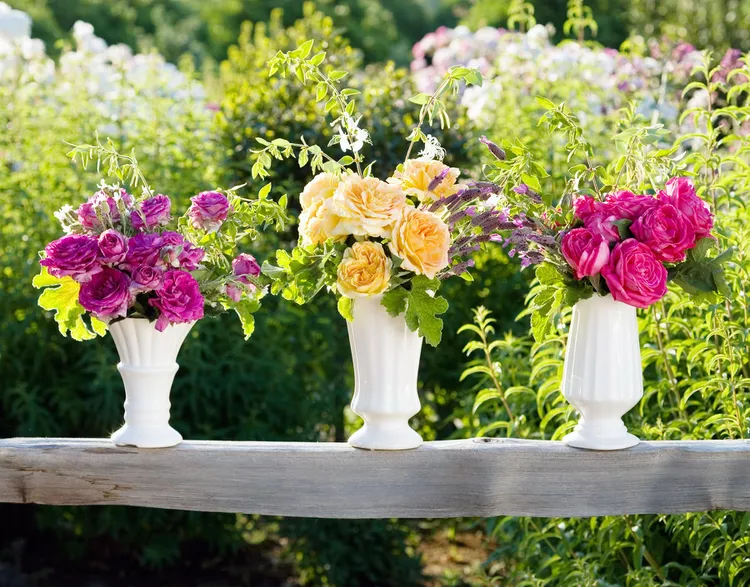
A cut flower garden doesn't have to be anything fancy. You can start by designating one flower bed for growing your favorite perennials and annuals for cutting. Then, if you find that you're using more flowers than you can grow in one season, you can always expand later on and plant a larger bed or multiple cut flower garden beds. Then, you'll have cut flowers whenever you want, plus a full, gorgeous garden. Here's how to get started.
How to Start a Cut Flower Garden
Starting a cut flower garden is as easy as creating any other planting bed, but siting it is a little trickier because you may not want all those chopped-off stems front and center. Use these tips to start a cut flower bed where you can pluck stems without worrying about leaving bare spots.
1. Choose a sunny, out-of-the-way spot.
Select an inconspicuous location (such as along a garage or in a back corner of your yard), and be sure your cutting bed gets lots of sun and has rich, well-drained soil.
A cut flower garden offers plenty of planting freedom. Its sole purpose is to produce flowers and even foliage for you to cut, so don't worry about how it will look. You can mix and match colors, textures, heights, and varieties.
2. Plant in rows.
Make the bed simple to weed, feed, and cut by planting the flowers in rows. You might even make your cut flower garden part of an existing vegetable or herb garden. The crop-style planting will blend in, and your "production" gardens will be in one location.
If you don't have gardening space to spare, spread cutting flowers throughout your existing beds; don't cluster them, or there'll be noticeable bare spots when you pluck them for arrangements.
3. Plan ahead.
Planning will help you avoid creating gaps in your cut flower garden. Draw your existing beds on paper, noting varieties, bloom times, and heights. Then pencil in the flowers you want to cut. Use bloom cycles as your guide to creating a productive mix.
4. Plant a variety of perennials and annuals.
Plant a balanced mix of cutting perennials and annuals. Your favorite perennials will return year after year, while annuals will let you experiment more easily. Both types of plants can make excellent cut flowers. The more colors, heights, and textures you grow, the more fun you can have creating indoor arrangements.
5. Consider all flowering plants.
Annual and perennial flowers usually get the most attention because they don't take up much space, but other plants will also look beautiful in bouquets. Use flowering shrubs such as hydrangeas and lilacs, aromatic herbs such as lavender, and plants with interesting foliage to add pizzazz to your arrangements.
Cut Flower Garden Tips and Techniques
Once you've planted your cut flower garden, here's how to get the most out of your plants.
1. Stagger planting times.
For flower varieties that bloom at a specific time, sow seeds a few weeks apart so the blooms don't all appear and disappear at once. You can also plant cold-season varieties like sweet peas in spring, and then replace them with warm season flowers like zinnias once they fizzle in the heat.
2: Keep your plants healthy.
Water, feed, and deadhead flowers regularly to encourage your plants to remain productive for as long as possible. And deal with any pests as soon as you spot them so they don't destroy all your flowers.
3. Cut flowers when it's cooler.
Cut your flowers in the early morning or evening, not in the heat of the day when they are stressed.
4. Keep things clean.
Use sharp, clean pruning shears or snips to cut stems. Cleanliness is key to long-lived blooms. Dirty tools can spread plant diseases.
5. Hydrate and preserve.
Submerge newly cut stems in a bucket of water mixed with a flower preservative. Let the flowers rest in the bucket of water for one hour to rehydrate fully before arranging them.