
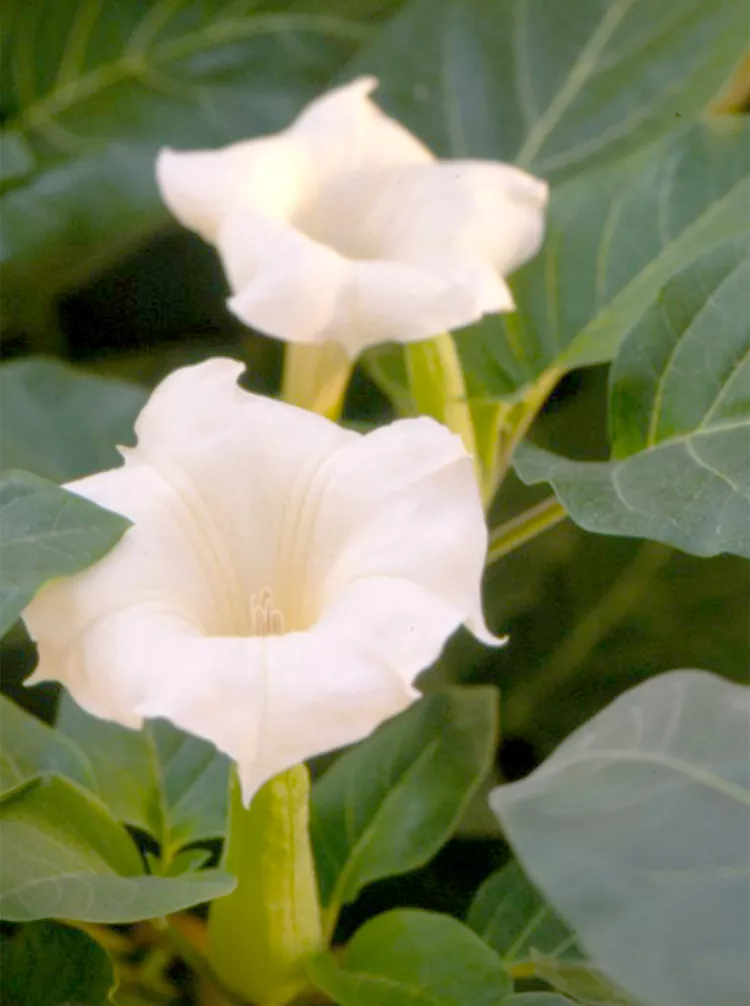
Moonflower (Datura spp.) is one of the most striking plants you can grow. The large, trumpet-shaped flowers unfurl in the evening and stay open until the sun rises. Several varieties of moonflower also give off a lemon fragrance when their flowers are open. Moonflower, devil's trumpet, jimsonweed, and thorn apple are just a few of the many common names for this self-seeding annual. While the nocturnal blooms of moonflower are certainly breathtaking, the gray-green tropical-looking leaves are another attractive feature of this plant.
Note: Another plant also goes by the name "moonflower," which causes confusion. Moonflower (Datura) and moonflower vine (Ipomoea alba) are different plants with different needs. This article is about moonflower (Datura).
Moonflower Overview
| Genus Name | Datura |
| Common Name | Moonflower |
| Plant Type | Annual |
| Light | Sun |
| Height | 1 to 3 feet |
| Width | 1 to 4 feet |
| Flower Color | White |
| Foliage Color | Blue/Green |
| Season Features | Fall Bloom, Summer Bloom |
| Special Features | Fragrance, Good for Containers, Low Maintenance |
| Propagation | Seed |
| Problem Solvers | Deer Resistant, Drought Tolerant |
Where to Plant Moonflower
Plant moonflower in USDA Hardiness Zones 3–9 where you can enjoy the evening fragrance of the flowers, such as in pots next to your porch swing. If you have pets or small children, make sure to place moonflowers out of reach.
As beautiful as this plant may be, it is deadly if ingested. When planting moonflowers, site them in a spot out of reach of children and pets. This plant also has a weedy nature and, in some cases, can become an aggressive spreader. To keep this plant from taking over a garden, pick off the seed pods.
How and When to Plant Moonflower
These plants are frost tender, so they should be planted outside in the ground or in container gardens after the danger of frost has passed in the spring.
Moonflower Care Tips
Light
Moonflower flourishes in sun to partial shade.
Soil and Water
Plant moonflower in soil that drains well and has a neutral pH. Water the plants regularly, but don’t let them sit in overly soggy soil or they'll rot.
Fertilizer
During the late spring/early summer blooming season, moonflower benefits from regular fertilization at half the regular strength. Use a fertilizer that is high in phosphorus, such as bone meal.
Pests and Problems
Moonflowers have few pest problems, although they might become infested with whiteflies, spider mites, or mealybugs. Most of these pests can be knocked off the plant with a strong spray of water from the hose. For more stubborn infestations, use neem oil or insecticidal soap.
How to Propagate Moonflower
As the life of the beautiful white blooms comes to an end, thorny pods begin to develop. Initially, the thorns are soft, but as they age and expand, they become hard and sharp. Wait until the seed pods dry on the plant. Then, break them open and collect the seeds. Sow them outside in the fall.
Types of Moonflower
As the name “moonflower“ suggests, many varieties open at night. The petals slowly unfurl as the evening comes. When morning arrives, the flowers curl up, reverting to their closed form.
'Blackcurrant Swirl' Moonflower
Datura 'Blackcurrant Swirl' offers double purple flowers on 5-foot-tall plants.
'Evening Fragrance' Moonflower
Datura meteloides bears pure-white flowers and fuzzy gray-green foliage on a plant that can grow 4 feet tall.
Moonflower Companion Plants
Cardoon
Few annuals are bolder or make more of a statement than cardoon (Cynara cardunculus). This stately plant can reach 5 feet tall and bears toothed, thistlelike, silvery leaves. The blooms look like silvery-violet artichokes and take a back seat to the plant's impressive foliage display. Though cardoon is perennial in Zones 7-9, they're usually grown as annuals.
Spider Flower
It's amazing that the tall, dramatic spider flower (Cleome hassleriana) is only an annual. Once temperatures warm up, it zooms to 4 feet or more quickly and produces large balls of flowers with fascinating long seedpods that whirl out from it. It typically self-seeds prolifically, so you only need to plant it once. Because it develops surprisingly large thorns, it's best to keep spider flower away from walkways. Group them in clusters of six or more for best effect.
Flowering Tobacco
Many types of flowering tobacco (Nicotiana) are terrifically fragrant, especially at night. There are several types of nicotiana (also called flowering tobacco because it's a cousin of the regular tobacco plant). Try the shorter, more colorful types in containers or the front of beds or borders. The taller, white-only types, which can reach 5 feet, are dramatic in the back of borders. They're ideal for night gardens because they're usually most fragrant at dusk. These plants do best in full sun and moist, well-drained soil, and they may reseed.
Garden Plan for Moonflower
Drought-Tolerant Garden Plan
This informal mixed garden bed features drought-tolerant trees, evergreen shrubs, perennials, and annuals.