
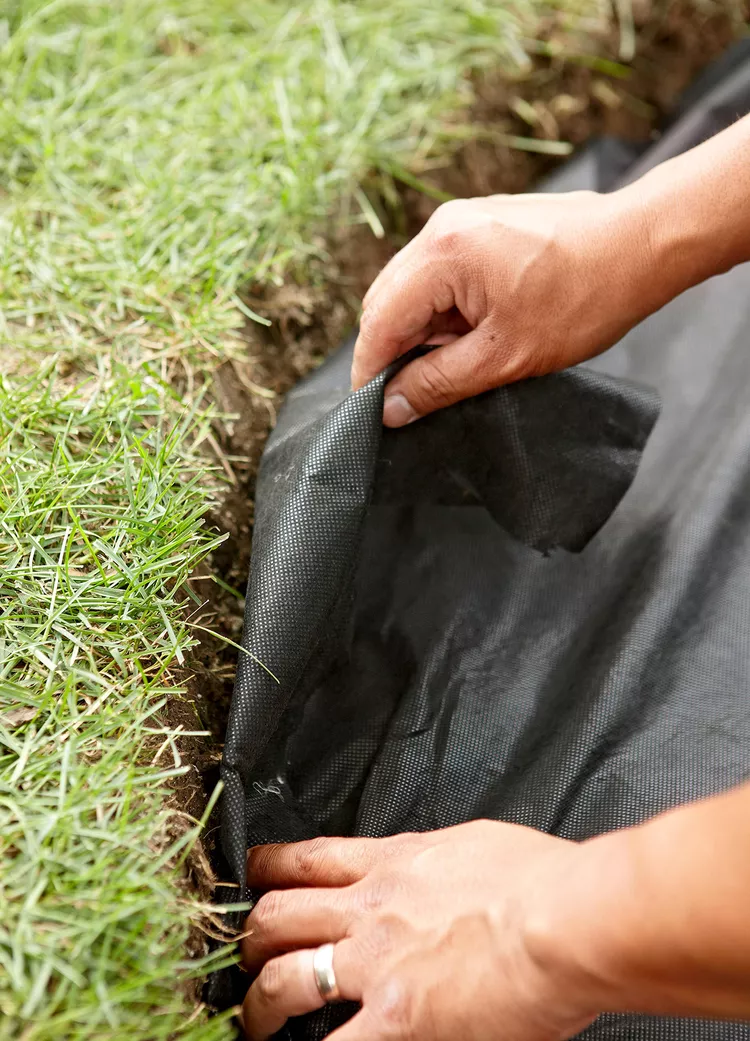
Landscape fabric seems like the perfect solution for blocking weeds from popping up in your garden. It lasts a long time, can be easily trimmed to fit any size of space, and is relatively inexpensive. But even though this fabric is used throughout yards across the country, few homeowners know how to use it properly. Here's what you need to know about the best practices for when and how to use landscape fabric, plus essential maintenance tips. And if fabric isn't the best choice for your situation, there are a few alternatives to consider as well.
Also called weed barrier or weed control fabric, landscape fabric is usually used to discourage weeds while allowing for movement of moisture both in and out of the soil. However, it isn't a permanent solution to controlling weeds (nature will find a way). Even when using landscape fabric, you'll still need to do some weeding.
Where to Use Landscape Fabric
It's best to use landscape fabric under inorganic materials such as rock, gravel, or sand. Landscape fabrics are less effective when used under organic mulch such as wood chips or bark. As this mulch decomposes, it effectively creates a new layer of soil above the landscape fabric. Before long, weeds seeds will germinate and send roots through the fabric itself, making those weeds more difficult to uproot. That said, if leaves and other plant debris are allowed to collect on top of inorganic materials like gravel, the tiny pockets of soil that result can also be enough to give weeds a foothold.
If you're thinking about using landscape fabric over existing weeds and grass to smother it, this is not recommended. The area you want to cover should be stripped of all vegetation first to avoid tough weeds from poking through the material. Once holes have been opened in the fabric, they create an opportunity for more weed to become established.
Landscape fabric has limited use in annual and perennial gardens where you would want to be doing a lot of digging and adding soil amendments like compost. It's easiest to use in places where you don't want anything to grow, such as under a deck or landscape pavers. You could also use it in smaller areas, such as around a tree, where you intend to rip up the fabric and replace it every couple of years.
How to Install Landscape Fabric
Made from a variety of organic, synthetic, and recycled materials, most types of landscape fabric can last several years. Weed barrier comes in a variety of thicknesses and durability, so care should be taken when deciding which is right for your intended use. To avoid common problems and make the best use of the product, here's how to correctly install landscape fabric.
Step 1: Prepare the Soil
Landscape fabrics should be applied on bare soil so all weeds and other vegetation should be removed if necessary. If the area will be planted, mix in any desired fertilizers, compost, and other soil amendments. Then, level out the soil to avoid holes and divots that may accumulate water and cause drainage issues.
Step 2: Lay Out the Fabric
After the area has been prepped, measure out the amount of fabric you'll need to cover it. Make sure to allow a few inches of overhang on all sides. Lay the fabric onto the soil surface so that the edges of the pieces overlap each other by 6-8 inches. This will prevent weeds from growing through the seams and allow for a little movement.
Step 3: Secure to the Ground
One of the biggest mistakes people make when using landscape fabric is to not secure it in place with anything other than mulch. As the mulch breaks down or gets displaced, unsecured fabric can slide out of place and become an eyesore. Use landscape pins, aka garden staples, to secure the fabric to the soil. About one foot between pins is sufficient to hold the fabric in place. Excess fabric along edges can be doubled back or buried in the soil.
Step 4: Add Plants (Optional)
If you want to create a new garden in the area, set out your plants across the secured fabric where you want them to grow. Then, cut holes in the fabric just large enough to fit the root ball of the plant, leaving the pieces of fabric still partially attached. Cutouts can be slit down the middle and after plants have been set in place, fabric can be re-laid around plants to avoid soil exposure around the base of plants.
Step 5: Add Toppings
After all plants have been placed, add bark mulch, gravel, rock, etc. across the fabric at a depth of about two to three inches. Water any plants, directing the water at their base.
Maintenance Tips
Over time, landscape fabrics break down, tear, and in some cases, biodegrade. Yearly maintenance is key to keeping the weed barrier secure and functional. If metal pins rust away or break, replace them as needed to keep the fabric in place. As organic mulches decompose, they should be removed and replaced too. Regularly clean out leaves and debris that collect on top of inorganic mulches to prevent them from giving weeds a spot to grow. Eventually, your landscape fabric will wear out to the point it no longer stops weeds and you'll need to remove and replace it if desired.
Landscape Fabric Alternatives
Some planting styles can decrease or even eliminate the need for landscape fabrics entirely. For example in naturalistic gardens, plants are grown closely together so they block out weedy competition. Another landscape fabric alternative is using cover crops. Also known as "green manures," cover crops not only help prevent weeds, they add nutrients and organic matter to soil after you end their growth.