
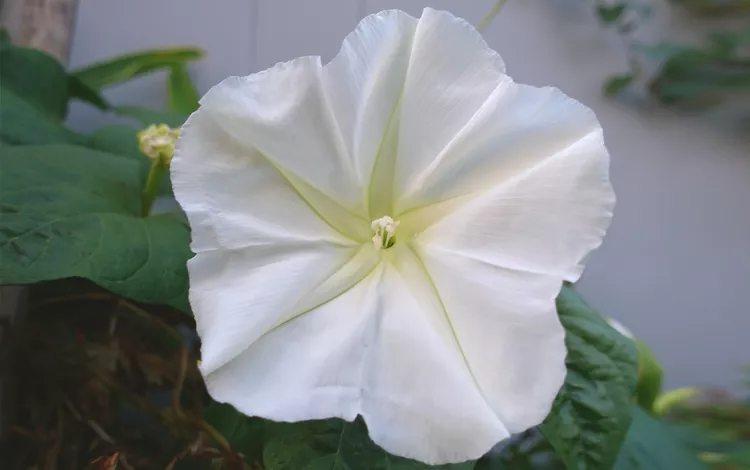
Moonflower vine (Ipomoea alba), with its large, pure white blooms and heart-shaped leaves, is one of many gardeners' favorite vining plants. This stunning vine offers 6-inch-wide flowers that open at dusk and release a sweet fragrance all night long.
Moonflower vine earned its moniker because the flowers open only at night. Because of this, use them to fill a nocturnal niche in the garden accomplished by few other flowers. Much like their cousins, the more common morning glories that bloom during the day, moonflower vine is easy to grow in the right location. Moonflower vine is usually grown as an annual, but it is a perennial in the tropics.
It's worth pointing out that another plant that goes by the name moonflower is sometimes confused with this vine; Jimsonweed (Datura)—like moonflower vine—has large white flowers that are often fragrant, but it doesn't grow as a vine, nor does it have heart-shaped leaves. All parts of the Jimsonweed plant are toxic to pets and people, so use caution around it.
The seeds of Ipomoea alba are toxic to humans, pets and livestock.
Moonflower Vine Overview
| Genus Name | Ipomoea alba |
| Common Name | Moonflower Vine |
| Plant Type | Annual, Perennial, Vine |
| Light | Sun |
| Height | 8 to 20 feet |
| Width | 3 to 6 feet |
| Flower Color | White |
| Foliage Color | Blue/Green |
| Season Features | Fall Bloom, Summer Bloom |
| Special Features | Fragrance, Good for Containers, Low Maintenance |
| Zones | 10, 11, 9 |
| Propagation | Seed, Stem Cuttings |
| Problem Solvers | Deer Resistant |
Where to Plant Moonflower Vine
Because the moonflower vine tends to bloom at night, you might wonder if you should plant it at all when you can't see the flowers open during the day. The answer is simple: It is magical when you grow it where you spend time outdoors in the evening, perhaps on your front porch or back patio. There, you'll be able to enjoy the huge white flowers that almost seem to glow in dim lighting and the sweet scent these beauties produce. Moonflower vine is native to the warmer regions of the Americas and attracts fascinating nighttime pollinators like large, green luna moths and hummingbird-like hawk moths.
Moonflower vines can also be grown in large ceramic pots to enjoy on a patio. Rather than producing the mass of vines and leaves when planted in the ground, being root-bound in a container seems to cause them to bloom earlier in the season. However, the potted vines don't seem to thrive quite like the in-ground ones.
How and When to Plant Moonflower Vine
Although perennial in areas without deep freezes (USDA Zones 9-11) during the winter, moonflower vine is usually treated as annuals and replanted each year.
Moonflower vine grows best in well-draining average soil. To start moonflower vine from seeds, you'll need to nick the thick seed coats with a file first or leave them to soak for a few hours before planting to help water get through. If you live in a tropical climate where the vines don't die in winter, you can cut the stems back in the fall and allow them to regrow. This is an easy way to minimize their tendency to climb where they're not wanted and to keep them looking tidy.
Moonflower Care Tips
Light
Moonflower vines grow best in full sun. They will grow in partial sun, but the volume of blooms will be reduced.
Soil and Water
Moonflower vine prefers consistently moist soil and quickly wilts in full sun without a steady supply of water. However, it pops right back up if watered quickly enough.
Temperature and Humidity
Wait until well after the last frost date of spring to set out seedlings or sow seeds. Any hint of cold weather will kill them. Moonflower vine loves hot, humid gardens.
Fertilizer
A "bloom booster" fertilizer that is high in phosphorus is important, particularly when moonflower vine is planted in pots. Avoid a high-nitrogen fertilizer because you'll end up with large green plants but few flowers. Fertilize once a month during the summer, following product label directions.
Pruning
No pruning is necessary, although deadheading spent flowers encourages additional blooms. In warm climates, the plant can reseed itself, so if you don't want it to multiply, be sure to deadhead the vines.
Potting and Repotting Moonflower Vine
Moonflower vine is easy to grow in containers as long as it has something to climb. Add a trellis or attach twine to a nearby support. The plant won't grow quite as large as those planted in-ground, but it still makes an impressive display. In a container, it requires more water, and it is even less cold-hardy than when planted in the garden, so it will most likely die even in warm areas. You won't need to repot it.
Pests and Problems
Aphids might bother a moonflower vine, but they can be controlled with insecticidal soap or neem oil. Keep a look out for tomato or tobacco hornworms. If you see one, pluck it off and drop it into soapy water.
How to Propagate Moonflower Vine
Gardeners can propagate moonflower vine with stem cuttings or seeds.
Stem Cuttings: After the weather warms and the vine shows vigorous growth, take 6- to 8-inch cuttings from healthy stem tips. Remove any foliage from the bottom half of the cutting and plop it in a glass of water. You can stop there because plenty of gardeners have success rooting moonflower vine in water. If you prefer, fill a small pot with sterile potting mix and insert the cuttings. Firm the planting medium around the stem, keeping it moist until roots form. The secret to success is a warming mat placed under the stem container—whether water or soil.
Seed: Gather a seed pod from the plant when it turns brown. You'll only have a day or so before it splits open and spills its seeds. After it is completely dry, split open the pod and capture the seeds. Keep them in a cool, dry place until you are ready to sow them. Four to six weeks before the last spring frost date, soak the seeds overnight in warm water. Sow them in seed-starting mix in small pots and cover them with a half inch of soil. Water the pot and place it in a well-lit area that is 65°F or warmer. The seeds germinate in only a few days. Transplant the seedlings outdoors after the weather warms.