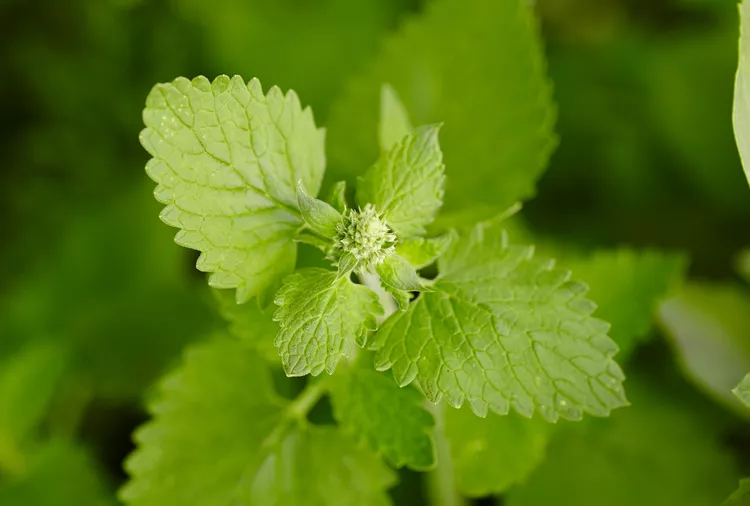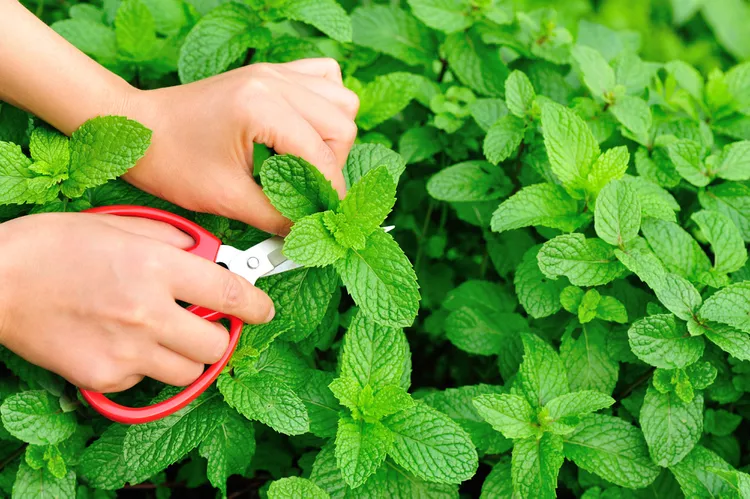
Peppermint, spearmint, and other mints are infamous for their aggressive growth rate and they can take over culinary gardens if you’re not careful. But growing mint in pots and knowing how to harvest mint the right way can keep this fast-growing herb from spreading too quickly. Whether you plan to grow fresh mint for salads or want to dry mint for teas and spice blends, you’ll learn all you need to know about harvesting and storing mint leaves here.
When to Harvest Mint
Thanks to mint’s rapid growth rate, you won’t need to wait long to harvest your mint plants. Mint is a cut-and-come-again herb that can be harvested throughout the season, although individual plants should be at least 4 inches tall before you start gathering leaves. Young and tender mint leaves are known to have the best flavor, so start picking mint plants in spring as soon as new growth emerges, and continue harvesting through fall to keep your mint plants more manageable.
While mint leaves and stems can be picked throughout the growing season, you’ll get the best flavor if you harvest the majority of your mint in summer, right before the plant flowers. Mint leaves and stems will also taste a bit better if you pick them early in the day, before the morning dew has evaporated. Mint leaves contain the highest concentration of volatile oils at this time and their flavor will be at its peak!
How to Harvest Mint
Mint can be harvested little by little as needed for recipes, or you can harvest a larger crop of mint all at once for drying and freezing. When you're drying herbs and flowers, keep in mind that even vigorous mint plants can become stressed by overharvesting, so never harvest more than 1/3 to ½ of your plant in one go. If you do take a larger harvest of mint, water your plants deeply after harvesting and give them a few weeks to recover before harvesting again.
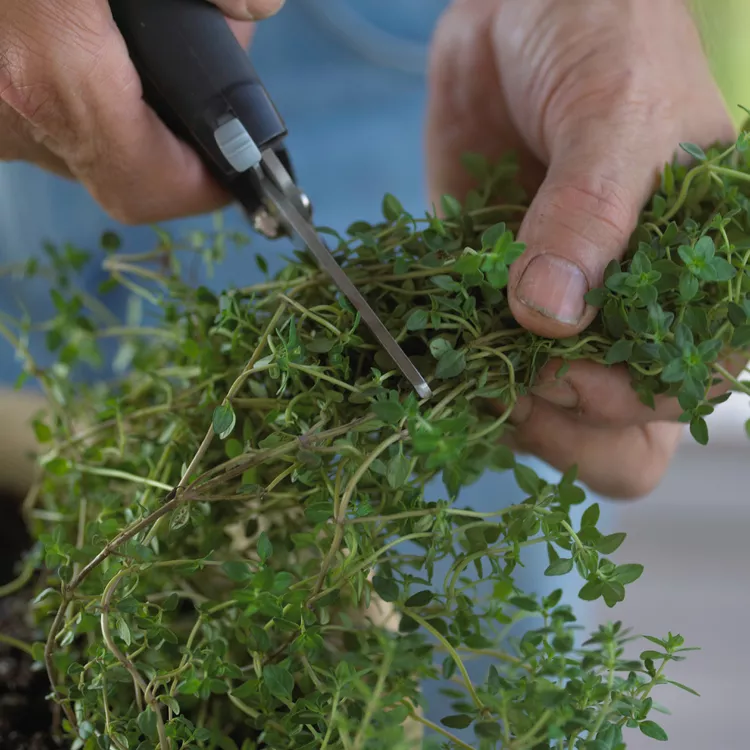
Pulling leaves off mint plants is not the best way to harvest mint as it can leave these edible plants more vulnerable to diseases and reduce branching. Instead, mint stems should be clipped off with sharp scissors or pruners below a leaf node to encourage the plant to grow more leaves. Once the stems are cut, the leaves can be separated from the stems or left on the stems for hang drying.
If you only want a small amount of mint leaves for cooking, snip off the stems you need about 1 to 2 inches above the soil line. If you want to harvest a lot of mint at once, gather a handful of mint in one hand and clip the stems off a few inches above the soil line with scissors or pruners.
Because mint grows quickly, you can usually gather a few large harvests of mint every year. Harvesting mint in mid-season before the plant flowers and again in fall before frost arrives can provide your kitchen with lots of fresh mint for eating and preserving.
How to Store Fresh Mint
Fresh mint can be stored in the fridge for a week or two by loosely wrapping cut stems in a damp paper towel and stowing them inside a zipper storage bag in the crisper drawer. Alternatively, you can place cut mint stems in a glass filled with 1 inch of water, cover the leaves and glass with a plastic baggie, and store the container in the fridge. Just remember to replace the water daily to keep your mint fresh.
For longer term storage, mint can also be flash frozen and then stored in airtight containers in the freezer. Or leaves can be chopped and frozen in ice cube trays with water or olive oil. Frozen mint should last for about 3 to 6 months, but you can preserve mint leaves even longer with dehydration.
How to Dry Mint Leaves
Mint can be dried using several different methods and the technique you choose will depending on your tastes and the equipment in your home.
For a low tech solution, loosely bundle mint stems with a rubber band and hang them upside down in a dry, dark place with good air flow. Allow the leaves to dry for a week or two until they can be easily crumbled between your fingers. Then separate the mint leaves and stems and compost the stems.
If you have a food dehydrator, remove the mint leaves from the stems and spread the leaves out in a single layer on a dehydrator tray. Allow the leaves to dry for 2 to 4 hours at 100°F to 115°F until the
leaves are crispy, but not brown. If you don’t have a dehydrator, mint leaves can also be dried in an oven set on the lowest setting.
Once mint leaves are thoroughly dry, store the dried leaves whole in airtight containers in a dry, dark place. Adding moisture absorption packets to your storage containers can keep dried mint fresh for longer, but they’re not required. When properly stored, dried mint should stay fresh for a year or more, but it will taste best if you grind it up just before use.