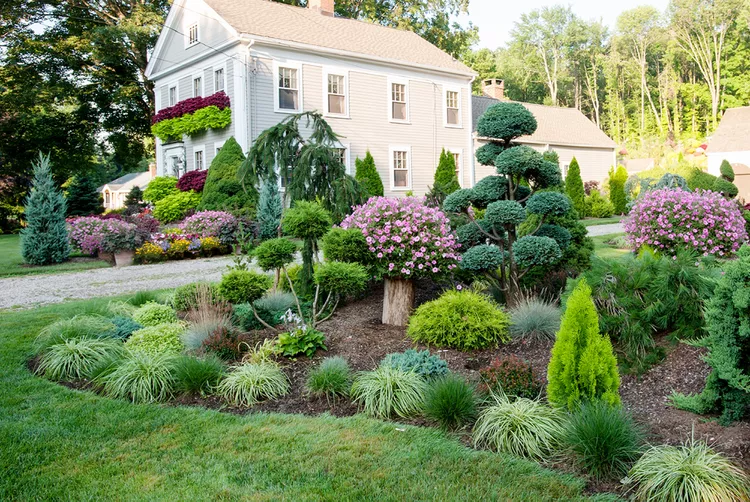
A pair of pruners and a few minutes of time are all it takes to turn these easy-care trees and shrubs into pretty pyramids and eye-catching orbs. Shaping topiary trees and flowering shrubs is part art and part science. Begin by choosing plants that tolerate frequent shaping and slowly push out new, dense growth after pruning. Then grab a sharp pair of pruners and get to work sculpting. Get started today with these surefire topiary trees and shrubs.
Juniper
One of the hardiest topiary-friendly shrubs, evergreen juniper is available in a wide range of colors and growth habits. ‘Blue Point’ has striking blue-green foliage and strong pyramidal form. ‘Moonglow’ has silvery blue foliage, and ‘Mint Julep’ has bright green foliage. Juniper is deer resistant.
Light: Full sun to part shade. Juniper tolerates part shade well and is a great plant for areas with morning sun and afternoon shade.
Soil: Drought-tolerant junipers thrive in well-drained soil. Sandy loam is ideal, but plants will grow in a variety of soil types provided the soil isn’t consistently wet or boggy.
Care: Junipers are slow-growing plants that tolerate extreme temperatures well. In regions with intensely cold winter temperatures, plants may take on a purple hue in winter before turning blue green again in spring. Water during periods of drought. Prune in spring as needed.
Zones: 3–9
Monterey Cypress
Also called lemon cypress, Monterey cypress is one of the most stunning evergreen trees with chartreuse new growth and bright lemon-yellow mature foliage. Its cinnamon-colored bark provides a wonderful contrast to the foliage. Unlike juniper which has a prickly texture, Monterey cypress foliage is soft, almost feathery.
Light: Full sun to part shade. Monterey cypress tolerate a variety of light conditions but grows best when it receives at least 6 hours of direct sunlight per day.
Soil: Plant these evergreen trees in well-drained moist soil.
Care: Monterey cypress benefits from deep, regular watering during the first couple of years after planting. After establishing a strong root system, it will tolerate moderate drought. Choose a location that is sheltered from harsh winter winds, especially in Hardiness Zone 7. Monterey cypress is deer resistant.
Zones: 7–10
Dwarf Alberta Spruce
Naturally cone-shaped, dwarf Alberta spruce makes a striking pyramid topiary wherever it is planted. Its tiny needles are arranged in a pleasing dense manner that makes it look lush and full. Prune this spruce a couple of times a year to maintain its size.
Light: Full sun to part shade. In Zones 7 and 8, dwarf Alberta spruce benefits from afternoon shade.
Soil: Plant in well-drained soil.
Care: Well-drained soil and regular, deep watering is key to a long-lived dwarf Alberta spruce. Plant it in an area where it will receive good air circulation; don’t plant it too close to a structure where air circulation will be impeded. Dwarf Alberta spruce is easy to grow in a container.
Zones: 2–8
Myrtle
Dark green, glossy leaves make this evergreen shrub a striking topiary plant year-round. The plant’s leaves have a sweet, spicy citrus scent that you’ll enjoy every time you prune. Myrtle can be shaped into a multitude of topiary forms—from orbs to pyramids to pompom trees. Grow myrtle in the garden where it can reach 12 feet tall when pruned minimally or choose a small cultivar, such as ‘Compacta,’ and enjoy it in a container. Additional attributes include drought-tolerance and deer resistance.
Light: Myrtle grows best in full sun to part shade. Myrtle will grow indoors when it has plenty of light. Place it in a south- or west-facing window to catch the most daylight.
Soil: Plant myrtle in well-drained soil. It adapts to a variety of soil types but is sensitive to a consistently moist root zone. Avoid planting it in clay and anywhere that experiences periods of standing water.
Care: Water myrtle deeply every week or so during the first growing season to encourage a robust root system. After a strong root system is established, the shrub usually has good drought tolerance. Prune myrtle in spring and again in midsummer if needed. If it becomes overgrown, myrtle can tolerate hard pruning. Remove as much as one-third of the length of the stems to bring the plant back into shape.
Zones: 8–11
Lilac Standard
A dwarf lilac is commonly grown as a shrub with multiple stems, but topiary forms on tall stems, called standards, are a fun twist on this traditional plant. A lilac standard is typically 4 to 6 feet tall, including the 2- to 3-foot-tall woody stem. The round cluster of leaves and flowers on top of the standard erupts in bloom in spring. The clean, green foliage decorates the plant through the growing season. Lilac standards require little pruning other than snipping spent flower blossoms and clipping back stems in early summer to maintain shape.
Light: Plant a lilac standard in full sun for good flowering. The best site has 8 hours of direct sunlight per day.
Soil: Lilacs grow well in moist, well-drained soil. Choose a location that drains freely and has no standing water.
Care: Lilac standards benefit from staking the first year or so after planting to prevent the top-heavy plants from leaning before its root system is established. Remove the stake in the second growing season. Prune lilac right after flowering in spring.
Zones: 4–8
Hydrangea Standard
Bring hydrangea flowers up to eye level with a hydrangea standard. These big, beautiful shrubs add instant height to the garden and are perfect for creating a focal point at the end of a path or in a quiet corner. Many types of hydrangeas bloom in summer, but with some varieties you will continue to see flowering shrubs in fall.
Light: Plant a hydrangea standard in full sun to part shade. In Zones 7 through 9 plant hydrangea where it will receive morning sun and afternoon shade.
Soil: Hydrangeas grow best in well-drained soil that is rich in nutrients. Amend the planting site by mixing in a 2-inch-thick layer of compost. Spread a 2-inch-layer of compost over the root zone each spring to add nutrients.
Care: Hydrangea standards are purchased at the garden center; it’s not possible to transform a traditional shrub-style hydrangea into a hydrangea standard. Maintain a hydrangea standard by pruning away spent flowers and cutting back wayward stems. Clip away rogue stems that rise from the base of the plant or the trunk.
Zones: 4–9
Boxwood
Tiny, evergreen leaves and a lush, full growth habit make boxwood one of the best topiary trees. Boxwood has been sculpted into a multitude of forms for centuries. It graced grand palaces and simple kitchen gardens thanks to its easy-growing ways. If you are aiming to create a pyramidal boxwood, for example, begin with a cultivar that naturally develops that form. ‘Green Tower’ and ‘Green Mountain’ are great upright selections. ‘Chicagoland Green’ has a round habit.
Light: Plant boxwood in full sun to part shade. It grows well in areas that receive at least 4 hours of bright light a day.
Soil: Well-drained soil is key to good growth. Avoid areas that are wet or boggy.
Care: Prune boxwood in spring and again in midsummer if needed. Plants can be pruned multiple times a year to maintain their shape. Stop pruning in August to avoid spurring new tender foliage that can be damaged in winter.
Zones: 4–9
Holly
A sharp pair of pruners is all you need to sculpt the dense, evergreen foliage holly into a sphere, spiral, pompom, or pyramid. This ultra-easy-care shrub will thrive in a container or planted in the ground. It is best suited for the moderate to warm zones 7 through 9. Boxwood is a good alternative to holly in Zones 6 and below. ‘Emerald Colonnade’ holly is a versatile cultivar that can grow 12 feet tall.
Light: Grow in full sun to part shade.
Soil: Plant holly in well-drained soil that is loose and light. Do not plant in clay.
Care: Water holly regularly and deeply during the first growing season to help it establish a strong root system. Holly tolerates mild drought once established. Prune plants in winter to maintain a tidy appearance.
Zones: 7–9
Arborvitae
Soft, evergreen foliage and exceptional hardiness make arborvitae a winning topiary tree for cool regions. This tough plant withstands below zero temperatures and drying winter winds with ease. Shear it into orbs or pyramids. For small garden topiaries, choose a petite cultivar such as ‘Anna’s Magic Ball’ or ‘Tater Tot.’ Strongly pyramidal cultivars include ‘North Pole’ and ‘Emerald Green.’
Light: Arborvitae grows well in full sun to part shade. Plants growing in part shade will not be as dense as those growing in full sun.
Soil: Moist, well-drained soil is ideal, but arborvitae will tolerate a variety of soil conditions.
Care: Water arborvitae regularly and deeply during the first growing season to establish a strong root system. Plants are mildly drought tolerant after established. Prune plants in spring or summer; don’t prune after late summer to avoid winter injury. Arborvitae is favored by deer; protect plants where deer populations are high.
Zones: 4–8
Waxleaf Privet
Texture-rich waxleaf privet has large, evergreen leaves. When pruned into a topiary form it has a course texture that is unique and pleasing in many settings. Its glossy green foliage is striking in a container or in a landscape setting. Due to its large leaves, waxleaf privet is best suited to large topiary sculptures.
Light: Grow in full sun to part shade.
Soil: Plant these evergreen trees in well-drained soil. They tolerate a variety of soil conditions.
Care: Waxleaf privet is one of the easiest care topiary trees. It thrives in a multitude of adverse growing conditions. Water it deeply during periods of drought and prune as needed to maintain shape.
Zones: 7–11
Dwarf Brush Cherry
A topiary shrub for warm regions, brush cherry has colorful bronze-red new foliage. The foliage turns green in summer and remains on the plant year-round. Brush cherry tolerates pruning well and can be clipped into a variety of forms. It makes especially pleasing pyramids and spirals.
Light: Plant in full sun to part shade.
Soil: Brush cherry grows best in well-drained soil that is rich in organic matter.
Care: Fertilize plants by spreading a 2-inch-thick layer of compost over the root zone annually in spring. Water these topiary trees regularly and deeply during the first growing season to establish a strong root system. Prune in spring after colorful new foliage turns green.
Zones: 9–11