
7 Must-Know Tips for Overseeding Your Lawn

9.2K
919
275
2025-10-26
7 Must-Know Tips for Overseeding Your Lawn

A healthy lawn has a brilliant way of making everything around it—from your home to landscape beds to a veggie garden—look more inviting. Wake up a thin, lackluster stand of turf with overseeding. When done right, overseeding can be a fast, low-cost way to add value to your outdoor space. For small areas of turf, all you need is a rake and grass seed. Large lawns call for specialized equipment, but the process is the same. Rent the equipment from your local hardware store and accomplish the job in a single afternoon. Overseed your lawn with ease with the help of these 7 must-know tips. 

1. Identify the Cause of a Thin Lawn

Before prepping the existing lawn and purchasing grass seed, take time to determine why your current lawn is thin. Overseeding can be a wasteful temporary fix if there is something significant causing poor turf growth. Does water stand for long periods after a rainstorm? If so, the soil might be too poorly drained for supporting turfgrass; a rain garden in a slow-draining area might be a better solution. Take a soil test. Is there a pH issue or a nutrient deficiency? Address these problems before overseeding. 

The most common causes of thin turf include high foot traffic, dense shade, drought and heat stress, and poor mowing practices. Each of these causes of thin turf can be remedied with overseeding followed by excellent lawn care. Generally, if a lawn is made up of at least 50% desirable grasses, it can be improved by overseeding. 

2. Time It Right

Where you live and the goal of overseeding will determine the best time to scatter seed. Overseed cool season grasses, such as Kentucky bluegrass and fine fescue, in late summer or early fall for a lush, thick lawn the following year. Grass seed generally germinates and thrives in moderate fall temperatures and regular rainfall. If you miss the fall seeding window, spring is the next best time. Overseed around the last frost date in your area.

Create a thicker, more lush, warm season lawn by overseeding in midspring. The best time to overseed is when the established grass greens up and begins actively growing. The exact time can vary from February to April depending on your location. For a green winter carpet in warm regions, fall is the best time to overseed with annual ryegrass. Wait until daytime temperatures are regularly in the 70s and low 80s before overseeding warm season grasses.

3. Reduce Competition

Prepare to overseed by mowing the existing lawn at a height of 1.5 to 2 inches. This short mowing height is essential for good seed-to-soil contact. Bag or rake the clippings to further increase the chances that the seed will not get caught up on grass blades and will instead contact the soil. 

4. Choose the Right Seed

Some turf species can tolerate a bit of shade, while others grow best in full sun. Some species tolerate lots of foot traffic, while others grow well in dry conditions. Choose the right type of grass for your overseeding area. Grass seed suppliers have done the hard work for you. Find grass seed mixes created specifically for sun, shade, high-traffic areas, or dry lawns at home improvement stores and garden centers. Choose a mix that mirrors the growing conditions in your landscape. 

5. Prep the Soil

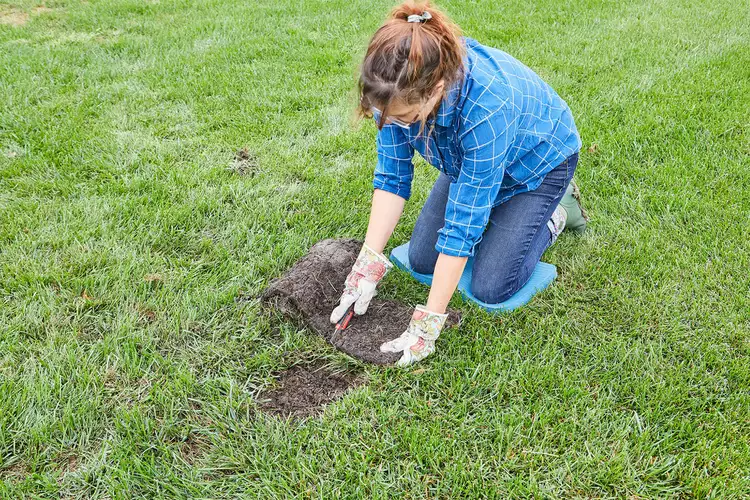
For a small area, such as a stretch of grass along a walkway or a patch of scruffy turf under a tree, grab a leaf rake. Gently rake the thin turf, removing debris at the soil level and roughing up the soil surface while not pulling out existing grass plants. Breaking up the soil surface makes a more hospitable home for new seeds. 

Overseeding an entire lawn is made easier with the help of a core aerator or vertical mower to help you prep the soil. Rent these walk-behind machines from a home improvement center or local hardware store. Use a core aerator to create a planting bed for the new seed. A core aerator has hollow metal tubes that remove plugs of soil as it passes over the turf. Make three or four passes with the machine over your lawn.

A vertical mower can be used to get the soil ready for seeds. The knife-like blades of this machine slice through the upper ¼- to ½-inch of soil. In the process, the vertical mower brings dead grass, called thatch, to the surface. Remove the thatch with a rake.

6. Spread Seed Evenly

For small areas, sow the grass seed by hand. Scatter it over the area by steadily moving your hand back and forth and allowing the seed to fall. Scatter the seed in a couple of different directions to ensure good coverage. Finish by gently raking the area to improve seed-to-soil contact.

For large areas, use a drop seeder or spreader to distribute seeds. If you used a core aerator to prep, break up the soil cores and mix the seed into the soil by dragging the area with a piece of chain link fence or a drag mat. If you used a vertical mower, work the seed into the soil by going over the area one more time with the machine. 

7. Give New Grass Some TLC

Keep the seeded area moist with light, frequent watering. It's usually necessary to water at least once a day unless it rains. Continue mowing frequently, maintaining the lawn at 1.5 to 2 inches, to reduce competition from the established grass. When seedlings reach a height of about 2 inches, increase the mowing height to 3 inches or so. About 6 weeks after germination, apply a turfgrass fertilizer formulated for new lawns.  

Related Article

3 Potted Plant Arrangement Ideas for a Gorgeous Patio Garden
9.1K
273
27

3 Potted Plant Arrangement Ideas for a Gorgeous Patio Garden

Fill a space with beautiful color and texture using containers that rival earthbound flower beds—especially in spots where planting is difficult.
6 Must-Know Tips on Mandevilla Care in Pots to Keep the Flowers Coming All Summer
15.4K
1.1K
496

6 Must-Know Tips on Mandevilla Care in Pots to Keep the Flowers Coming All Summer

Mandevilla care in pots is a little different than growing these gorgeous summer-blooming plants in the ground. Use these tips to keep your potted mandevilla plant thriving and flowering all season.
14 Holiday Planter Ideas That Will Give Guests a Warm Welcome
15.8K
946
132

14 Holiday Planter Ideas That Will Give Guests a Warm Welcome

Use outdoor arrangements to set a festive mood this holiday season. Copy these holiday planter ideas, or use them as inspiration for your custom look.
7 Easy-to-Grow Bonsai Tree Types Perfect for Beginners
11.9K
830
141

7 Easy-to-Grow Bonsai Tree Types Perfect for Beginners

These bonsai tree types are easy to care for, indoors and outside. They include tough conifers such as juniper and pine, and popular houseplants such as ficus and schefflera.
How to Plant and Grow a Redbud Tree
29.4K
1.5K
161

How to Plant and Grow a Redbud Tree

Add colorful texture and three seasons of interest to small garden spaces with the easy-to-grow redbud tree.
How to Sharpen Your Lawn Mower Blade for a Cleaner Cut
39.1K
1.6K
750

How to Sharpen Your Lawn Mower Blade for a Cleaner Cut

Follow this step-by-step guide on how to sharpen your lawnmower blade for grass that will look tidier and stay healthier all season long.
How to Get Rid of Clover in Lawns
21.6K
864
224

How to Get Rid of Clover in Lawns

Learn how to get rid of clover in lawns with these tips for using fertilizer, herbicides, and more, plus advice for embracing a mixed-species lawn.
How to Grow and Maintain a Zoysiagrass Lawn
26.2K
262
36

How to Grow and Maintain a Zoysiagrass Lawn

Slow-growing zoysiagrass is a lawn grass for warm climates. Count on it to grow well in part shade or full sun and stand up to foot traffic.
How to Plant Sod in 5 Simple Steps
42.7K
854
409

How to Plant Sod in 5 Simple Steps

Sod is best planted in the spring and early autumn when the temperatures are cooler. Follow these steps for a how to plant sod.
25 Gardening Tips Every Gardener Should Know
16.7K
667
120

25 Gardening Tips Every Gardener Should Know

Whether you have a green thumb or not, check out this list of essential gardening tips to ensure that all your plants grow and thrive.
How to Propagate a Rubber Plant Successfully
1.8K
176
66

How to Propagate a Rubber Plant Successfully

Learn how to propagate rubber plants through cuttings and air layering with this step-by-step guide.
Here's Why Your Snake Plant Leaves Are Falling Over, and What to Do About It
33.1K
3.3K
1.1K

Here's Why Your Snake Plant Leaves Are Falling Over, and What to Do About It

Wondering why your snake plant leaves are falling over? This guide will help you figure out and fix the problem.
How to Grow and Care for a Coffee Plant Indoors
46.1K
922
405

How to Grow and Care for a Coffee Plant Indoors

Learn how to grow a coffee plant indoors, including tips on light, humidity, watering, and pot size. This houseplant will add a tropical touch to your home with its glossy green leaves.
How to Plant and Grow Vanilla Bean Orchids
29.3K
1.2K
257

How to Plant and Grow Vanilla Bean Orchids

Some orchids do more than flower. Find out how to grow vanilla bean orchids at home and harvest your own vanilla beans.
11 Tropical Flower Plants That Will Enliven Any Room
12.5K
625
250

11 Tropical Flower Plants That Will Enliven Any Room

Add color to your home with these blooming tropical flower plants. We have all the info you need to care for them to add color and fragrance.
How to Spot 5 Common Plant Diseases and Keep Your Garden Healthy
4.4K
219
37

How to Spot 5 Common Plant Diseases and Keep Your Garden Healthy

Protect your plants from the most common diseases. Learn to recognize the symptoms and how to prevent these diseases in the first place.
8 Insect-Repelling Plants that Work Naturally to Send Bugs Packing
34.4K
2.8K
660

8 Insect-Repelling Plants that Work Naturally to Send Bugs Packing

Improve your time outdoors with a few strongly scented insect-repelling plants, which can send pesky biting bugs, like mosquitoes and flies, packing.
Prevent Damping Off Disease in Seedlings with These 8 Simple Tips
25K
1.5K
210

Prevent Damping Off Disease in Seedlings with These 8 Simple Tips

Protect seedlings from damping off disease and boost seed germination rates with these growing tips.
How to Get Rid of Cucumber Beetles on Your Plants
40.6K
405
52

How to Get Rid of Cucumber Beetles on Your Plants

Have you noticed little bugs on cucumber plants in your garden? Find out how to identify a cucumber beetle and prevent these insects from killing your cucumber, melon, squash, and other crops.
21 Best Vegetables to Grow in Pots
4.1K
326
68

21 Best Vegetables to Grow in Pots

Choose from these vegetables to grow in pots to enjoy plenty of homegrown produce even from a small space. From petite tomato plants to mini melons, this list includes 21 tasty options that will thrive in containers.