
If you’ve ever seen a rose bush that looked like something out of a horror movie, you may already have an idea of what rose rosette disease (RRD) looks like. Perhaps you saw an infected plant with oddly-shaped, fleshy limbs in the landscaping at your local grocery store or dentist’s office–or, sadly, in your own garden. Usually lethal and contagious, this plant disease has some gardeners and landscapers worried about choosing to grow roses, but much of this concern is misplaced.
“You can manage a good rose garden even with rose rosette disease in your area. You just have to be vigilant,” says David Byrne, co-leader of Sustainable Roses, a collaboration between more than 50 experts and organizations studying the disease.
This guide explains what rose rosette disease is and where it's a problem. You'll also learn what the major symptoms are so you can diagnose and manage RRD in your garden. Plus you'll get tips for preventing RRD from infecting your roses in the first place.
- David Byrne co-leads Sustainable Roses, a multi-million dollar effort to study the rose rosette disease and breed resistant roses.
- Maher Al Rwahnih is director of Foundation Plant Services at UC Davis, California, which provides disease-free rose stock to commercial growers.
- John Hammond is a USDA plant pathologist who works with Sustainable Roses.
- Ron Ochoa is a USDA entomologist researching the mites that transmit rose rosette disease.
What is rose rosette disease?
RRD is a so-far-incurable illness caused by a virus that only affects roses. Afflicted plants quickly lose their garden value. Within three to five years, the disease usually kills by either draining a rose bush’s energy to produce excessive, distorted growth or by making it susceptible to other plant diseases and cold weather.
The severity of the virus and its ability to quickly spread have changed the way gardeners should approach growing roses. According to Byrne, RRD probably originated in native roses in the Rocky Mountains long before the first reported sightings in the 1940s. By the early 2000s, it had become the most significant disease of garden and landscape roses.
Where is rose rosette disease a problem?
RRD is established in parts of the United States and Canada. Sightings have also been reported in India, China, and more recently the Netherlands. Experts have different opinions about the likelihood of further spread. But there’s enough concern that the EU, the UK, and other countries have passed regulations to try to prevent it.
That said, depending on where you live, you may not have to worry as much about an outbreak. “There’s a lot of areas where you don’t see much of it,” says Byrne. “There seems to be a northern limit for one. And going south, there seems to be a line at Northern Florida.”
Sustainable Roses maintains a constantly updated map of RRD sightings across the US. You can use it to get an idea of whether the disease is common where you live. You can also report your own sightings and post pictures for an expert diagnosis.
Symptoms of Rose Rosette Disease
RRD often shows itself while there’s still time to stop it from spreading. Sometimes the symptoms are subtle, especially early on, but often they’re obvious: rambunctious, abnormal growth that looks like a succulent weed with herbicide damage somehow shot out of your elegant rose bush. Check your roses a couple times a week during the growing season to catch symptoms as early as possible.
Major symptoms
- Witches brooms. A thick cluster of stems growing out of a single node or a short portion of a stem. Sometimes the foliage looks more like frisée salad greens than rose leaves. Leaflets are spaced more closely along the stem.
- Unusually red pigmented leaves that never turn green. Their shape, size, and arrangement on the stem are usually different from normal growth but sometimes the only clear way to tell the difference is to wait to see if the leaves eventually turn green.
- Fleshy, succulent growth that may never harden off. It’s often reddish and much thicker than the stem it emerges from. It may snap easily.
- Excessive thorniness. It’s normal for roses to have significant variation in thorn size and density from limb to limb, so milder versions can be hard to diagnose. Severe RRD hyperthorniness looks alien. Another giveaway that it’s an RRD symptom is that the thorns may remain rubbery. Healthy thorns harden.
- More problems with common rose diseases such as black spot and powdery mildew.
- Unusual amount of dieback, especially during winter.
- Small clustered flower buds, or inflorescences, that may not open. Or no flowers at all.
- Sometimes instead of permanent reddish growth, you'll see yellow or mottled yellow-green growth.
- To confuse things, symptoms can also include stunted growth instead of rampant growth. Stunted growth may be harder to spot and may be hidden in the middle of dense rose bush.
Often multiple symptoms appear together. The more you see at once, the more clear the diagnosis. Unfortunately, a rose can also carry the virus for years without showing symptoms.
When It Probably Isn't RRD
You’ll have an easier time spotting symptoms if you know what’s normal for each of your roses. Most roses produce soft, reddish new growth with smaller leaves. If healthy, this growth eventually hardens, turns green, and the foliage reaches its normal size and shape.
Some roses, like Chinas, produce multiple stems from a single node. Don’t confuse them with witches brooms. There are also harmless rose oddities. For example, you might see proliferation, which is a flower emerging from the middle of another flower.
Stem fasciation, which is when stems grow flat like a ribbon, is another oddity you might see. Extreme versions of this are sometimes referred to as devil’s tongues. Despite the diabolical nickname, it’s actually harmless by itself, and can just be cut off the plant. You may see fasciation listed as a symptom of RRD, but according to Byrne it has nothing to do with it.
Damage from weed killers that contain glyphosate can superficially share some of the same traits as RRD like witches brooms and strappy, narrow leaves. However, the abnormal leaves will often look chlorotic or whitish when herbicides are to blame. And herbicide damage doesn’t cause witches brooms, hyperthorniness, or redness.
Additionally, there are other rose diseases like rose mosaic virus that aren’t an emergency. RMV can make leaves look like they’ve been tie-dyed with yellow pigment, but won't easily spread to other roses.
How Rose Rosette Disease Spreads
“Rose rosette stands out from other viruses basically by how efficient the vector is; the ease of transmission,” says Maher Al Rwahnih, director of Foundation Plant Services at UC Davis, which supplies virus-free rose cuttings to commercial growers.
The vector, which spreads the disease, is a wingless, microscopic mite named Phyllocoptes fructiphilus. It can float long distances in the wind or hitchhike on people or animals and pop up where you don’t expect it. It only lives and feeds on roses.
John Hammond, a USDA plant pathologist working with Sustainable Roses says the spread of the virus by the mite probably goes like this: the mite sucks sap from an infected rose. After the virus goes through the mite’s gut, it makes its way into its saliva. If the mite blows onto an uninfected rose, it will suck sap from it too. Some of its infected saliva will enter the new rose and potentially infect it with RRD.
The mites can also move from one rose to another if the two plants are touching. The mites are not a problem in and of themselves as long as they don’t feed on an infected rose.
What to Do If You See RRD Symptoms
If you're not sure about the diagnosis, you can post a picture of the symptoms on the Sustainable Roses site or Facebook page and wait for a response, or ask a local expert. You can also get genetic testing done at a plant diagnostic clinic. It can be expensive and many labs charge an extra out-of-state fee, so check the National Plant Diagnostic Network for a lab where you live. But the longer you wait, the more likely the rose will infect another rose.
According to Byrne, if you are positive your rose has RRD, "you should remove it." And remove the infected plant carefully to avoid spreading mites. Prune it back close to the ground stem by stem. Place the stems in a garbage bag or box as you remove them. Then dig up what's left. Get as much of the roots as you can. If you have other roses next to an infected one, keep a close eye on them for RRD symptoms.
If you can't immediately dig up a diseased rose, prune out the symptomatic growth and carefully dispose of it. You can’t cure a rose by pruning out infected growth, but you can reduce the population of infected mites. They congregate on witches brooms in 40 to 50 times the numbers they do on regular growth. Then, dig up the rest of the rose plant as soon as you can.
How to Prevent Rose Rosette Disease
You've already taken the first preventative step by learning about RRD. “Then start with clean roses, stay clean, and don’t spread it," says Al Rwahnih. "Look at the plant you’re buying and make sure it’s free of symptoms. Ask the nursery what’s the source of their plant material.”
Beyond being careful about what you introduce to your garden and knowing what to look for, there are a few other strategies you should consider:
- Quarantine new roses away from your garden for a few weeks before planting them.
- Don’t plant roses next to each other. Replace the old fashioned rose garden or drift of landscaping roses with a mixed planting of flowering shrubs instead.
- Create barriers to disrupt mites from blowing in. It can be as simple as planting against a wall, behind a hedge, or behind a barrier of tall ornamental grasses.
- Avoid using leaf blowers near roses so you don't spread mites from infected to uninfected plants.
- Keep your roses well pruned so you can spot symptoms quickly on any part of the plant.
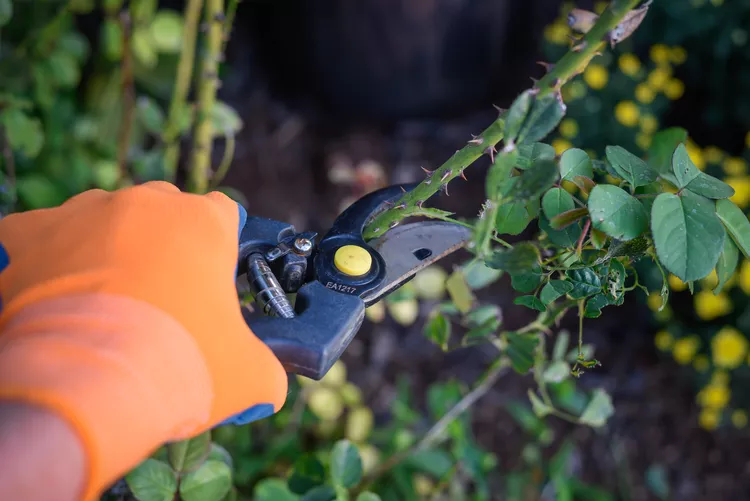
- Practice good garden hygiene. Spray your clippers with a disinfectant between plants. Mites die within a few hours if they don’t have a rose to feed on. Garden tools should be safe to use the next day if they’re stored away from roses.
- Visit other rose gardens carefully. If the gardens you visit have RRD, you could bring stowaway mites home with you and spread the disease to your garden. Wash up and change clothes before going into your own garden.
If you live in an area with a lot of RRD and grow many roses, consider taking more aggressive steps to control the mite population. That may include a heavier late winter pruning to get rid of the mites overwintering on your plants, followed by an application of dormant oil. During the season you might alternate between two types of miticide once every 2 to 3 weeks. Ron Ochoa, a USDA entomologist researching the mites, says they only live 10 to 15 days. Timing your applications to the mite’s life cycle is a key to successful miticide application.
Future Hope for Roses
One day, RRD may become rarer and less destructive. Byrne estimates that his breeding program may get RRD-resistant roses on the market in as few as 10 years. Other hybridizers are using his research to produce their own resistant varieties. There may even be a more distant future where classic roses get modified to have resistance and sick roses get cured. In the meantime, the odds are already good that you can avoid losing any roses to RRD with a little awareness and a few precautions.