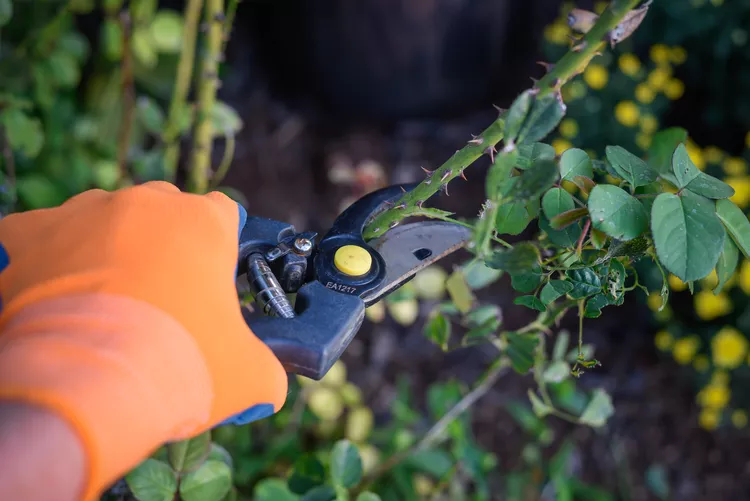
Correctly trimming trees and the techniques for how to prune trees properly combine art and science. Many questions may run through your mind when determining how to prune trees. Is this the right time to prune? What if I remove too many branches? Should I remove this branch? Having the answers to all your questions will give you the confidence to add longevity to your trees and beauty to your landscape through thoughtful pruning. Then, take a deep breath and start making your cuts.
How to Prune Trees Safely
Approach every tree pruning situation by assessing the need for a professional arborist. Then, leave these tasks to the professionals with the equipment and advanced training for tricky pruning jobs:
- Tree trimming near power lines.
- Removal of large dead or dangling branches.
- Big branches near homes or buildings.
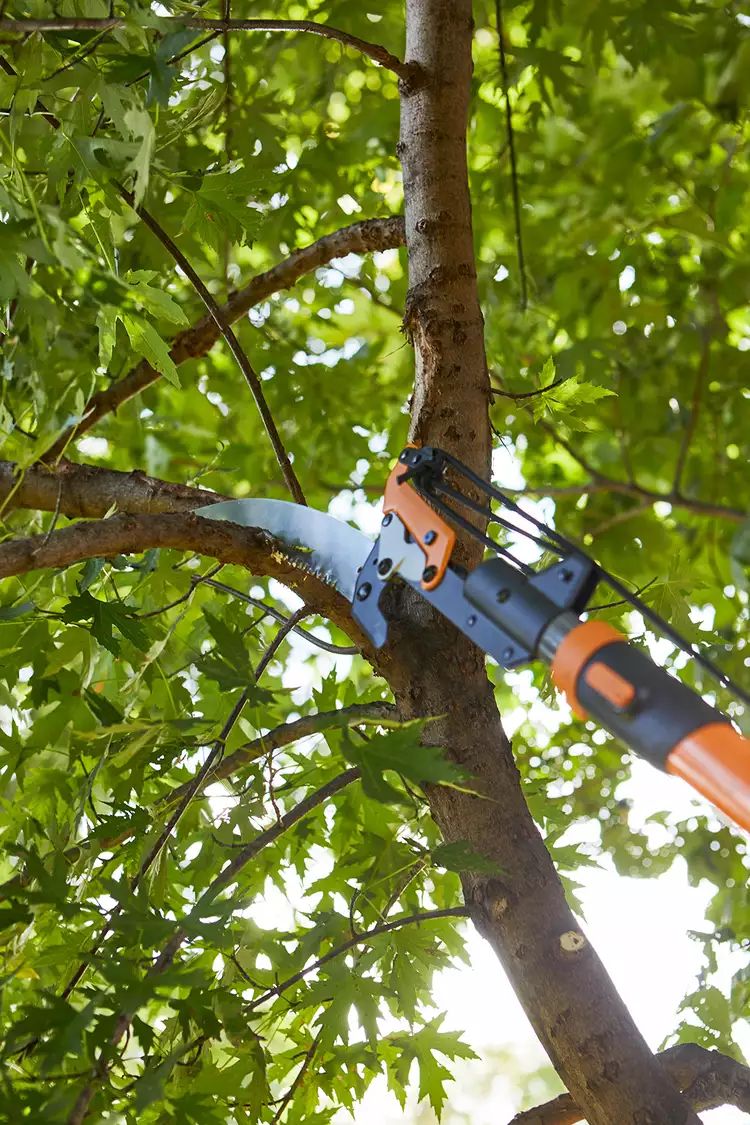
Using a high-quality pole saw greatly increases the safety of pruning in many situations. It's also a good idea to have someone nearby in case of an accident while pruning trees.
When to Prune Trees
Late fall and early winter are the best times to prune deciduous trees (most evergreen trees should be lightly pruned in late winter). The bare branches allow you to see the tree structure clearly. Avoid major tree pruning during "maple sugar time" (January through early March in most areas).
Beetles that attack oak trees are active from late spring through midsummer. If oak wilt is present in your region, don't prune your oaks during this period.
Prune away dead or diseased branches whenever you notice them. Waiting until fall or winter to prune these branches could cause further tree damage or infection in the case of diseased branches. (When pruning diseased branches, dip the pruning blade in a 10 percent bleach solution between each cut to avoid spreading disease.)
:strip_icc():focal(814x0:816x2):format(webp)/making-final-cut-pruning-tree-branch-130f5537-ff738c0960094a91aedf9a099bc3c18e.jpg)
:strip_icc():focal(517x647:519x649):format(webp)/view-after-lower-branch-cut-off-pruning-df409918-517e5592dc2f4e20a90bf72b7aede4a9.jpg)
How to Prune Trees with Large Branches
Larger branches are best removed in three steps:
- Make a shallow cut on the underside of the branch, about 4-5 inches from the trunk.
- Cut the branch off about 2-3 inches from the initial cut. When the weight of the unsupported branch causes it to fall, the initial cut keeps the bark from peeling down the side of the trunk.
- Make the final cut, removing the remaining stub. Make this cut just outside the branch collar: the slightly swollen area where the branch and trunk are joined together.
How to Prune Trees That Are Challenging
Natural growth patterns, storm damage, and specific landscape needs can create unique tree-pruning challenges. Here are the most common situations and how to prune trees with these issues.
V-Shape Branching
Some trees naturally form narrow, V-shape junctures. While these narrow branch arrangements sometimes weaken the tree's overall structure, not all require corrective pruning.
Native elms, hornbeams, serviceberries, hickories, and Osage orange trees are generally strong enough or small enough that little corrective pruning is needed for structural purposes, except to remove crossing branches that might rub.
Other trees, particularly maples, flowering pears, ashes, willows, and basswoods, should be watched closely and given early training to avoid structural problems as they grow larger. Narrow, V-shape junctures are inherently weak and can break off in wind or ice storms. To prevent V-shapes from causing problems, remove one of the stems while the tree is young.
The following is a list of trees that tend to form V-shape junctures:
- Basswoods (Tilia spp.)
- Elm (Ulmus spp.)
- Flowering pear (Pyrus calleryana)
- Hackberry (Celtis spp.)
- Hornbeam (Ostrya spp. and Carpinus spp.)
- Locust (Gleditsia spp. and Robinia spp.)
- Mulberry (Morus spp.)
- Osage orange (Maclura pomifera)
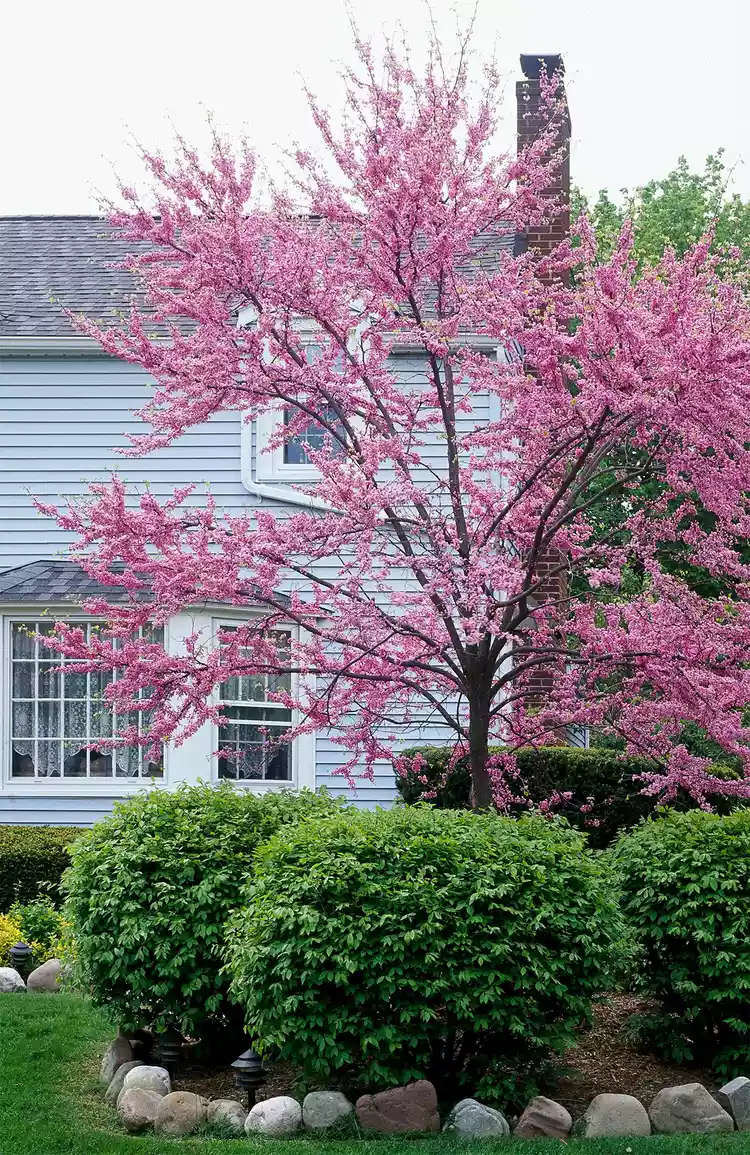
- Redbud (Cercis spp.)
- Serviceberry (Amelanchier spp.)
- Some ashes (Fraxinus spp.)
- Some hickories (e.g. Carya cordiformis)
- Some maples (e.g. Acer saccharum, A. saccharinum)
- Willow (Salix spp.)
- Zelkova (Zelkova spp.)
Suckering
Some trees send up new shoots from the ground as a survival instinct. Over time, these fast-growing stems can weaken the main tree. Remove suckers before they're 6 to 12 inches tall by cutting them off at ground level—with a lopper, for example.
The best way to avoid annual suckering challenges is to avoid planting trees that commonly produce suckers. A reputable nursery or landscaper will be a great help.
Forked Trunks
Forked trunks are less stable than a single trunk and often grow together, leaving a hollow cavity where insects and rot can further weaken the tree. The tree will eventually split, or one of the trunks will break off.
To prevent this, remove one of the forked trunks while the tree is still young. Cut as close to ground level as possible, cutting at a slight angle so rainwater drains off the tree stump. Take care not to damage the bark on the remaining trunk.
Clustered Branches
Too many branches bunched together can quickly weaken a tree. Small, weak branches limit the development of larger ones. Removing excessive branches, often growing laterally, will give the remaining branches better air circulation and sunlight. This is especially important with trees that form multiple branches at a single point on the trunk, creating a weak zone.
Stubs
A stub remains when a branch breaks off in the wind or is cut too far from where it joins the tree. Remove stubs as soon as you notice them. A stub prevents a protective callus from closing the wound and provides insects with an entry point. Once insects make inroads, moisture and rot can take over. When cutting off an old stub, be careful not to cut into the swollen callus tissue forming near the trunk. It's needed to seal the wound.
Tree Wounds
You don't have to apply a seal over pruning cuts or broken branches. Allowing a wound to breathe will help it heal faster. Dressings sometimes prevent the growth of callus tissue (the swollen area) and may trap moisture that encourages rot.
Most arborists now use tarlike wound dressings only for special purposes. For example, some insecticidal wound applications might be used to discourage beetles from visiting and possibly spreading oak wilt disease.
Crossed Branches
Any branches that cross over one another should be removed as soon as possible. As they grow larger, they will rub together as they move in the wind. This often leaves wounds that cannot heal or will weaken the tree by providing entry points for plant diseases. Choose the strongest of the crossed branches and remove the other.
What to Do with Large Pruned Branches
Once your trees are trimmed, you'll need to dispose of the branches or find a way to use them for other things. The most obvious way to use tree branches is for firewood, especially in locations with cold winters. You can create mulch with a chipper; if you don't own one, you can rent one from a local hardware store. If you have a large property, use the wood to define areas of your yard for a natural-looking fence or border. You can also use tree branches for composting or to build arbors, benches, or tables for your outdoor space if you're handy.