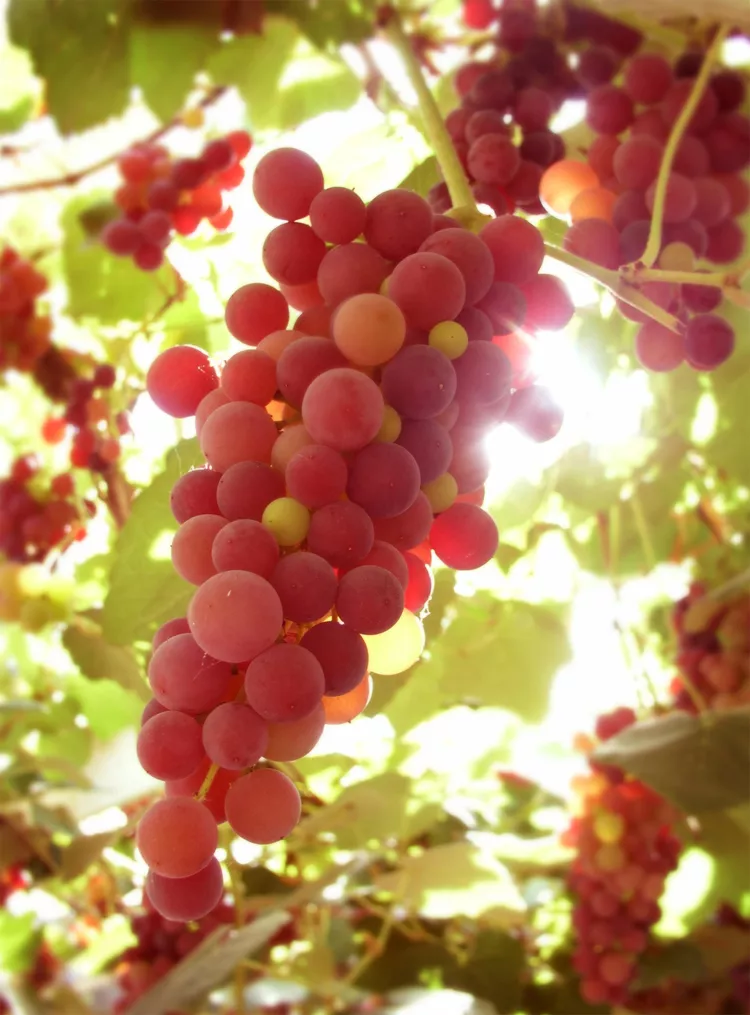
You don't have to own a California vineyard to grow your own grapes. Learning to grow grapes gives you the delight of picking a fresh treat off the vine, enjoying homemade jams and jellies, and even making your own Cabernet (or whatever your wine of choice is). To grow grapes successfully, you must know which variety to select based on your region and how you want to use them. Grapes of different types are hardy in Zones 4-10, so there's a grape for your location. Use this guide to get all the details, including tips on planting, growing conditions, harvesting, and pruning.
Where to Plant Grapes
Grapes tolerate a variety of soil types. Well-draining soil provides the biggest harvest. Highly fertile soil is not essential; grapes grow in dry sandy soil as well as fertile black loam. Choose a site that receives at least six hours of bright sunlight a day. Beware of nearby trees or buildings that might cast shade.
Herbicide drift is another consideration, especially in rural areas. Broadleaf herbicides, such as 2,4-D and dicamba, injure grape vines. Choose a site protected from herbicide drift by large trees and inform your neighbors of your grape planting. In urban areas, encourage neighbors to apply broadleaf herbicides in the fall when the herbicide is most effective and does the least damage to grape vines.
How and When to Plant Grapes
Spring is the best time to plant grapes, especially in cold zones. This gives them the most time to get established before winter sets in. Many mail-order nurseries sell them as bare roots. Before you plant, cut the existing roots back to 6 inches; this will encourage feeder roots to grow near the trunk. Soak bare-root plants in a bucket of water for three to four hours before planting. At planting, remove all canes except the most vigorous one. The planting hole should be about 12 inches deep and 12 inches wide. Add 4 inches of soil in the center of the hole and set the bare-root vine on top. Fill in the rest of the hole with the remaining soil, making sure to keep the soil level below the graft (the swollen area of the main stem). Water immediately after planting.
Grapes grow upward and therefore need support. You can use a trellis, arbor, fence, or any post in the ground. You can decide which method fits your garden best, but be sure to have the supports in place before you plant the vines.
On a vertical trellis, you will select branches from the previous year's growth to grow along the support wires. The buds along the stems will flower and set fruit. The trellis can have two or three levels, and the center stem is left to grow up to the next level. If you'd like the grapes to hang overhead from an arbor, train the vines to grow that way. You'll still shorten the branches and select a few to secure to the metal or wood arbor.
Allow the grapes to grow to the top of the support in the first year, and remove the top of the cane to force it to grow laterally (parallel to the ground) from there.
Grapes Care Tips
Light
Grapes require full sun all day, no matter the region—they need heat to ripen the fruit. Also, make sure the foliage doesn't block any light.
Soil and Water
Growing grapes requires deep, well-draining soil that's free of weeds and grass. You don't want the vines to compete for water and nutrients. The root system of a grapevine can grow deep, so well-cultivated soil is best. Young grapes require an inch of water weekly during their first two years. If rainfall doesn't supply this amount, water the plants.
Temperature and Humidity
The best temperature for growing grapes is 77ºF to 90ºF. Any temperature below 77ºF will limit the growth of the fruit. Grapes prefer average humidity. Very high and very low humidity are not good for grape plant growth and fruit production.
Fertilizer
For the first two or three years, apply a nitrogen fertilizer in early spring, following product label instructions for the amount to use. You may not have to do this as the vines mature, but it all depends on your observation. If the vines look vigorous and healthy, you don't need any fertilizer.
You can also apply compost around the base of the vines for the first two to three years each spring. Don't use mulch, though; it keeps the heat- and sun-loving plant too cool.
Pruning
Grape vines produce fruit on one-year-old canes. Two-year and older wood is not fruitful. So annual pruning is required to produce maximum yields of high-quality fruit. If a vine is left unpruned, it will produce many more grape clusters than it can ripen. The entire plant weakens under the strain of ripening the fruit.
The best time to prune grape vines is late winter or early spring, while they are leafless. There are many different ways to prune grapes. Remember, fruit is produced on the current season's growth, which originates from last season's wood.
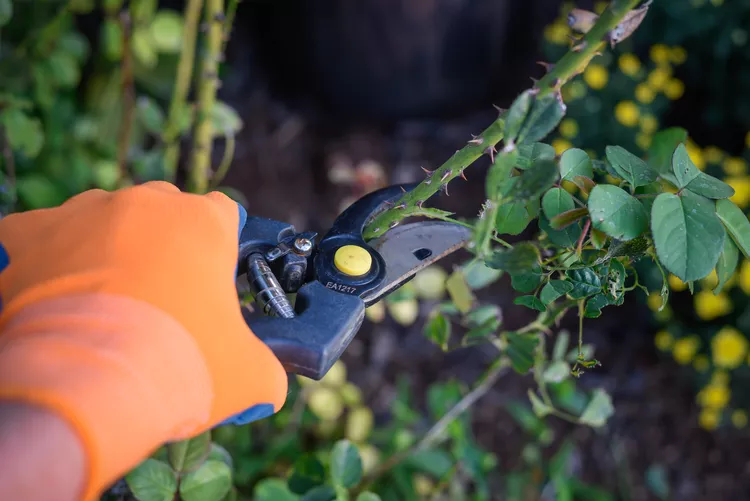
Pruning and training grapes may sound complicated, but it doesn't have to be. In early spring before the first growth, remove canes that produced fruit the previous year. Keep a few strong stems, and train them on wires or a trellis. Shorten them to fit the space if needed, and prune everything else off. The amount you must cut may shock you, but your grapes will grow better. You'll see buds on the remaining growth, and each bud will produce several shoots that grow leaves and flowers.
Pests and Problems
Fungi that can reduce the quality of grapes or cause fungus to develop include downy mildew, powdery mildew, grey mold, black rot, and anthracnose. Crown gall is caused by a bacterium and can kill grape vines.
If pests are eating your grapes, cover the grapes with fine mesh netting. The mesh reduces the need for chemicals and should be fine enough to keep flies, moths, beetles, and other insects from snacking on them.
How to Propagate Grapes
Propagate grapes through dormant stem cuttings. Prepare a garden bed with well-draining soil. After the vine goes dormant in fall, select 12- to 18-inch cuttings from one-year-old growth. The cuttings should be long and straight and about the thickness of a pencil. The cuttings must be right side up or they won't root, so cutting the base of the cuttings straight across and the tops at an angle will help you identify which side is up.
Immediately, dip the bottoms of the cuttings in rooting hormone before placing them in the prepared soil. Ideally, position three buds underground and one bud above ground. Firm the soil around the cutting and keep it moist, not wet, for the rest of the winter. Growth won't start until the following spring. When it does, watch closely and plant the cuttings in their permanent location before the buds begin to swell.
Not all cuttings will root, so prepare at least 10 percent more cuttings than the quantity of vines you need.
Types of Grapes
Excellent varieties for table grapes include 'Mars', 'Reliance', Jupiter', 'Marquis', and 'Vanessa'. To make jams and jellies, grow 'Buffalo', 'Price', 'Fredonia', 'Niagara', 'Concord', and 'Catawba'. Good wine grapes for the home garden include 'Maréchal Foch', 'Baco Noir', 'Brianna', 'Marquette', 'Seyval Blanc', and 'La Crescent'. Check with your local Extension Service to learn more about the top grape varieties for your area.