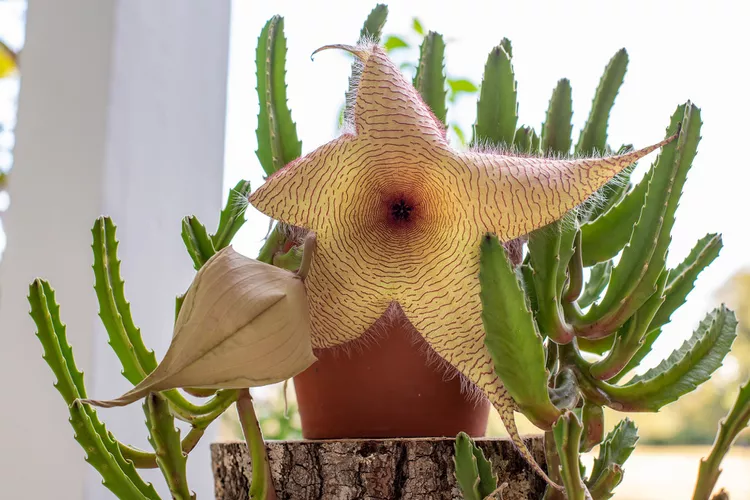
Stapelias are succulent houseplants widely known for their outlandish, uniquely colored hairy flowers and pungent odor. They thrive in dry, incredibly well-drained soil and vary in size from diminutive (3 inches tall and 12 inches wide) to relatively large (1 foot tall by 3 feet wide). The Stapelia genus includes more than 40 South African succulent species, only a handful of which are commonly grown as houseplants in the U.S.
The ease of growth and the plant’s photogenic flowers are worth the inconvenient odor typical to most stapelia flowers, which accounts for the carrion flower common name.
Carrion Flower Overview
| Genus Name | Stapelia |
| Common Name | Carrion Flower |
| Additional Common Names | African Starfish |
| Plant Type | Houseplant |
| Light | Part Sun, Shade, Sun |
| Height | 3 to 12 inches |
| Width | 1 to 3 feet |
| Flower Color | Pink, Purple, Red, White, Yellow |
| Foliage Color | Blue/Green |
| Zones | 10, 11, 9 |
| Propagation | Division, Seed, Stem Cuttings |
| Problem Solvers | Drought Tolerant |
Where to Plant Stapelia
Stapelias are not hardy outdoors in most parts of the United States. Potted specimens can be placed outdoors or directly in the garden, provided they are brought indoors before the temperature settles at 50°F. Protect the plant from excess moisture, including irrigation and rainfall, or your plant will not survive its outdoor vacation.
Stapelia Care Tips
Stapelias are increasingly more common in the retail market, and like many succulents, they make excellent houseplants for novices and collectors alike. Most stapelias available commercially are relatively easy to care for when they are watered sparingly, receive warm temperatures with bright filtered sunlight (add a grow light if needed), and grow in fast-draining soil. As with most succulents, overwatering leads to root rot and death.
Light
Stapelias grow in regions with intense sunlight. Many can survive in full sun conditions. However, in nature, stapelias often grow under the protection of other plants that filter the extreme midday sun. When grown as houseplants, they need bright indoor light to thrive.
Stapelia houseplants moved outdoors enjoy morning or late afternoon sun but grow best with some protection from the most intense sunlight of the day. Plants grown in full sun may develop a red or purple hue on the stems. This red pigment helps protect the plant from sunburn. Although this discoloration is not harmful to the plant, it may be a signal to move your plant into more shade or back indoors.
Soil and Water
Plant stapelia in gritty, well-drained, slightly alkaline soil. Growing stapelia in small, shallow terracotta pots reduces excess moisture around the roots. Water only when the soil is dry. Add perlite, gravel, or grit to standard cactus planting mix, and allow the roots to fill the pot before repotting.
Stapelia doesn’t tolerate wet feet and must be watered sparingly during the growing season, with little to no water in winter. As with most houseplants, overwatering leads to rot and a premature demise. The plants consume more water in summer than in spring and autumn. Stop watering entirely in winter when the plant begins to go dormant. During dormancy, the stems may shrink. This is normal. Only water the soil lightly during this time and ignore the urge to soak the soil. It is common to go three to four (or more) weeks without watering during the dormant period. When the seasons change, the plant rebounds, and you can increase the watering schedule. If in doubt, don’t water.
Temperature and Humidity
Plants thrive in 70°F–95°F and low humidity. Extremely high temperatures may slow or even stop growth, which resumes as the weather cools. Stapelias cannot tolerate temperatures regularly at or below 50°F, although they can handle short drops in temperature provided the weather warms during the daytime. When temperatures are consistently around 50°F, welcome any outdoor plants into the safety and warmth of the indoors, where they must remain until the temperature warms.
Fertilizer
Stapelias need little to no fertilizer, although they may respond well to half-strength applications of low-nitrogen fertilizer, often labeled cactus fertilizer, during the active growing season. Don’t fertilize stapelias in autumn or winter.
Pruning
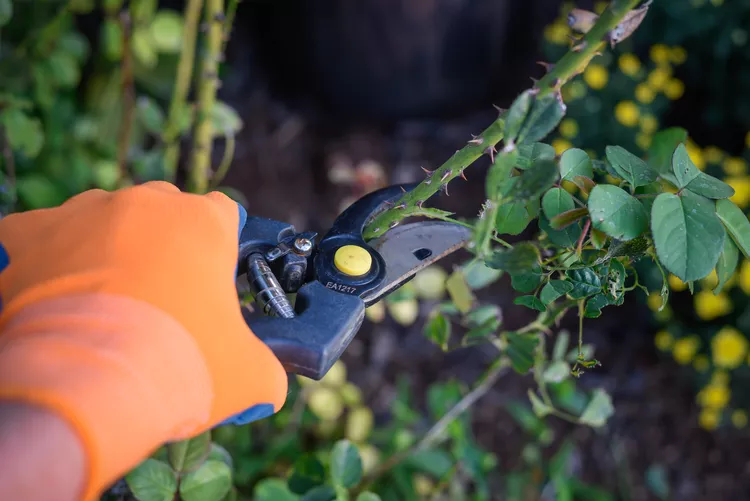
Only prune stapelia to remove dead, diseased, and dying stems or to make cuttings for propagation. Use a clean, sharp knife or pruner to make the cuts, and wear gloves to avoid touching the milky sap that oozes from the wound, which irritates some people. If you are removing diseased or rotting stems, sterilize your tools between each cut, and make the pruning cuts well behind the diseased tissue to ensure that you remove all the unhealthy material. Even a tiny amount of rotting tissue can quickly spread and destroy the remainder of the plant. Plants that have been heavily pruned need less water.
Potting and Repotting Stapelia
Stapelias can spend many years in the same container and rarely need to be repotted. For plants that are entirely root-bound, gently remove the plant from the pot early in the growing season, cut away dead or shriveled roots with sterile tools, and repot it into a slightly larger container with a well-draining cactus soil mix. Only lightly dampen the soil after repotting, and wait at least a week before thoroughly watering the plant. Allow the soil to dry between waterings. Plants shifted up to a larger planter require less frequent watering due to the increased amount of soil in the pot.
Pests and Problems
The easiest way to end the life of most succulents is overwatering, and stapelias are no exception. Excessive water quickly leads to root rot and fungal attacks, overtaking a plant and turning a prized specimen into a rotted pile of muck.
If you notice your plant declining, evidenced by soft and rotting stems, immediately unpot the plant, wash away all the growing media, and cut out and dispose of all affected roots and stems. If the remaining healthy plant material includes roots, repot it in fresh potting medium. If there are no healthy roots, take stem cuttings as you would when propagating the plant, and—in time—your plant will be back in business.
Occasionally, mealybugs settle onto stapelias. They are easy to identify and can be wiped away with a cotton swab soaked in rubbing alcohol.
How to Propagate Stapelia
Stapelias are usually propagated through division or cuttings. Plants in cultivation rarely set seed.
Separate rooted sections early in the growing season and repot them immediately into appropriately small pots. Grow them on as usual.
Cuttings are best taken during the warm growing season in spring through summer. Use a sharp, clean knife or pruning shears to make clean stem cuts. Allow the severed ends to dry and callous in a shady space, preferably indoors with good airflow. The length of time varies from days to weeks, depending on the size of the stem. Once the cut section has firmly calloused, place the stem piece lengthwise onto fast-draining growing media. Barely moisten the soil mix, and then wait. Rooting can take place in as few as several days but may take weeks or months. Re-dampen the soil lightly and infrequently. It is good practice not to bury the cut stems of your cuttings, as they are prone to rot. Most stapelias root readily from the side of the stem.
If you are fortunate and your plants set seed, sow them on a mix of lightly dampened sand and potting soil, barely covering them with the growing medium. Add a clear plastic cover and place them in a warm place with bright, indirect light. Vent the plastic every few days, and lightly moisten the soil as needed. Seeds should germinate within one to two weeks. Maintain these growing conditions until the plants are approximately 1 inch tall.
Types of Stapelia
Zulu Giant
The stems of Zulu giant (Stapelia gigantea) are velvety, soft, and girthy, up to 1.25 inches thick. The massive flowers can reach more than 10 inches across and are cream-colored with thin red stripes. This species is commonly available and particularly pungent when in bloom. It is also one of the more forgiving species of stapelia, able to tolerate less-than-ideal growing conditions, including too much sun, excess shade, and too much water. The flowers are large enough that you can hear them open, resembling the sound made by slowly tearing a sheet of paper.
Giant Toad Plant
Giant toad plant (Stapelia grandiflora) is a large species of stapelia similar in size to Stapelia gigantea. It blooms with profusely hairy red flowers. The flowers are variable, ranging from light red to a rich, dark maroon color. The stems grow up to 12 inches long. The starfish-shaped flowers reach 8 inches.
Starfish Plant
This dainty relative of stapelia boasts 2-3-inch wide yellow-and-speckled chocolate flowers and 4-inch tall stems, making it a perfect candidate for growing in small containers. It is often sold as Stapelia variegata, although the correct name is now Orbea variegata.
Stapelia flavopurpurea
The 2-inch, greenish-yellow flowers of Stapelia flavopurpurea have delightful pink centers and, most importantly, a pleasant fragrance. This tiny, star-shaped stapelia grows only 4–6 inches tall and wide.