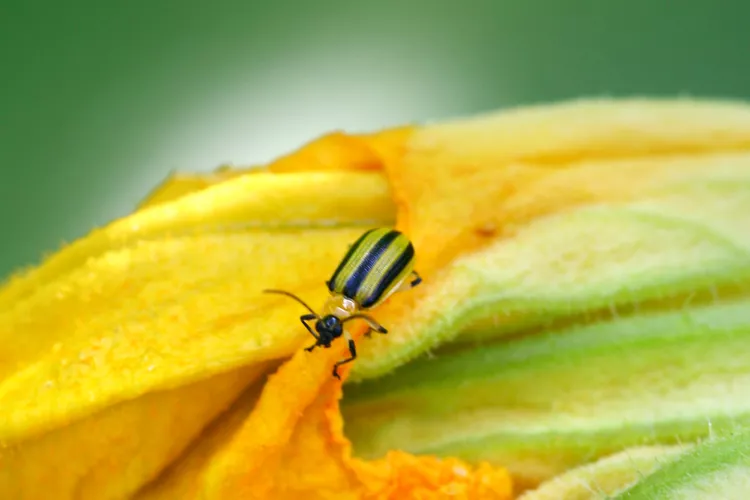

Squash bugs (Anasa tristis) are infamous plant pests with an insatiable taste for cucurbit vegetables, including summer and winter squash, pumpkins, melons, gourds, zucchini, and cucumbers. These garden marauders are notoriously difficult to control; they overwinter in plant debris and emerge year after year to wreak havoc in garden beds. With the right tips and tools in your gardening arsenal, you can prevent and get rid of squash bugs for good using all-natural, organic methods.
Identifying Squash Bugs
Adult squash bugs measure about ½ inch long. Their gray-to-brown, flat bodies are shaped like a cello instrument, with gently flaring sides ornamented with tiny orange stripes. While they can fly, squash bugs usually walk between plant leaves and stems on their slender, black legs. These insects are most active during the warm summer months.
Squash bug eggs are reddish-brown and oval-shaped. They are usually found in clusters on the underside of plant leaves. In about 10 days, they hatch into baby squash bugs or nymphs.
Squash bug nymphs also congregate on the undersides of leaves, and their teardrop-shaped bodies are sometimes covered in tiny spikes.
Squash Bug Look-a-Likes
Squash bugs are relatively common throughout North America, but several insects closely resemble them. Before diagnosing a squash bug problem, double-check that you’re not dealing with these squash bug look-a-likes.
Stink bugs are often confused with squash bugs, but they are different insects. While stink bugs damage plants, their shield-shaped bodies are wider than squash bugs.
Squash vine borers also target cucurbit crops, but vine borers are moths with orange bodies and black wings.
Assassin bugs closely resemble squash bugs, but assassin bugs are the “good guys,” and they protect gardens. These beneficial insects don’t damage vegetables; they feed on garden pests, including squash bugs. Unlike squash bugs, assassin bugs are solitary critters, and they’re rarely seen in groups.
Signs of a Squash Bug Problem
Compared to other garden pests, squash bugs are relatively large, so you may see them feeding in clusters around plant crowns, on plant stems, and on the underside of leaves. If you don’t see the squash bugs themselves, you may notice signs of squash bug damage, including:
- Yellow stippling on plant leaves. Squash bug saliva is toxic to cucurbit vegetables. It causes plant leaves to turn yellow in areas where squash bugs have been feeding.
- Brown, wilted, or crispy leaves. As squash bugs continue to feed on plant sap, yellow leaf stippling progresses to more severe damage. If infestations aren’t treated quickly, affected plants may begin to drop leaves.
- Wilted, stunted, and dead plants. Established plants may be able to withstand a squash bug invasion, but young plants might not be so lucky. A large infestation of squash bugs can kill young plants or cause older plants to grow slower.
- Damaged fruit. Squash bugs primarily feed on plant leaves and stems, but they also feed on developing fruit. Extensive feeding can leave unsightly scars on zucchini and other squash skins, making them difficult to sell at farmers markets.
Tips for Preventing and Controlling Squash Bugs
Taking steps at the beginning of the season to prevent squash bugs is always the best option. However, if squash bugs have already invaded your garden, don’t despair. These pests can be removed using all organic methods, although you’ll need to act quickly to limit their spread.
1. Choose resistant plants.
Squash bugs are particularly fond of winter squash and pumpkins, but there are some cucurbit plants they don’t like. If you want to avoid squash bugs in the future, grow plants that are naturally resistant to squash bugs, such as butternut and ‘Royal Acorn’ squash.
2. Install barriers.
Because squash bugs are most active early in the season, row covers are particularly effective against them. For best results, install row covers in spring and use them in conjunction with crop rotation. Remove the covers when your plants start to bloom, or hand-pollinate the flowers to ensure your cucurbits produce a good harvest of fruit.
3. Grow companion plants.
Companion planting is an organic gardening method that can control several pests, including squash bugs. Squash bugs tend to avoid plants like catnip, marigolds, nasturtiums, and bee balm. Interplanting these companions among cucurbits can keep the vegetables safe. You can also companion plant with flowering herbs, like dill, to attract beneficial insects that feed on squash bug eggs.
4. Try handpicking.
Pesticides often don’t work against adult squash bugs, but you can control squash bug nymphs and adults by handpicking them off your plants and dropping them into a bucket of soapy water. While you’re at it, inspect the underside of the plant leaves for squash bug eggs and scrape off the eggs you find using a butter knife or prune the infested leaves and burn them. To stay on top of squash bug problems, check your plants at least once a week for newly laid eggs.
5. Use organic sprays.
Instead of applying chemical pesticides, use organic insecticidal soap sprays to vanquish squash bug nymphs. Apply soap sprays every three to five days to infested leaves and stems, but avoid spraying plant flowers, as even organic products can affect pollinators.
6. Make a squash bug trap.
Squash bugs usually hide under rocks and plant debris at night—a fact you can use to your advantage by making a squash bug trap. Lay a board or old tile on the soil near infested plants in the evening. Check the trap early the next morning and destroy any squash bugs you find.
7. Be vigilant.
Eradicating large populations of squash bugs takes time, so don’t give up if you haven’t gotten rid of all the squash bugs in your garden in one go. Check the affected plants at least once a week for new eggs and nymphs and closely inspect hard-to-reach spots, like under leaves and along plant stems. Using multiple pest control strategies together, such as companion planting combined with crop barriers, usually yields better results than a single solution.
8. Clean the garden thoroughly.
Squash bugs hide in old leaf litter during the winter, but you can keep them from reemerging in spring by cleaning up and destroying diseased plant matter in the fall. If possible, burn any infested cucurbit plants and avoid composting infested leaves and stems, as most compost piles don’t get hot enough to kill squash bugs and their eggs. Also, wait until spring to mulch your vegetable garden, as squash bugs sometimes overwinter in thick layers of mulch.