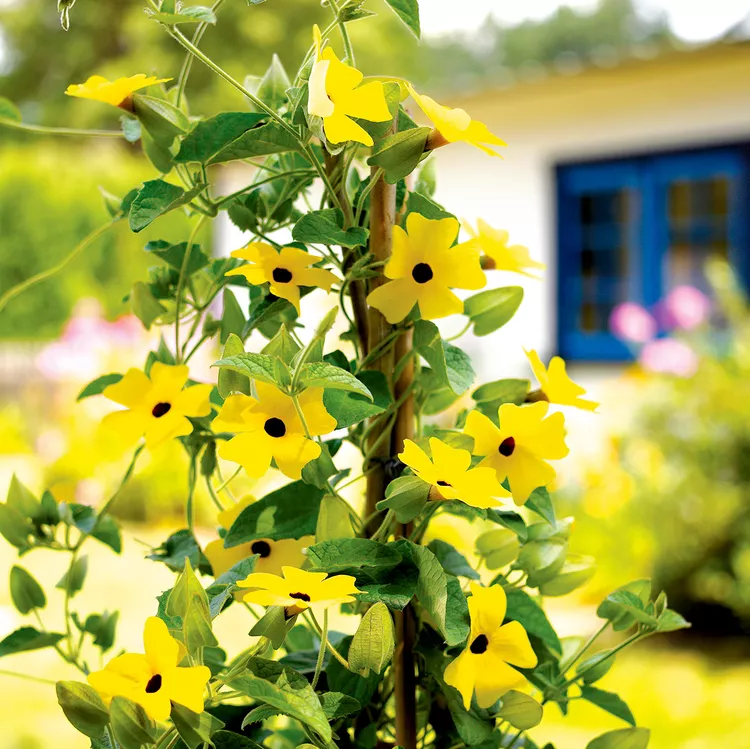
Black-eyed Susan vine is an old-fashioned ornamental favorite beloved for its cheerful yellow blossoms that unfurl with abandon from midsummer until the first frost of fall. A tender evergreen perennial, black-eyed Susan vine will ramble up a short trellis and trail from window boxes and baskets as it attracts a parade of pollinators like bees and butterflies.
Despite its common name, black-eyed Susan vine (genus Thunbergia) is completely unrelated to the perennial garden staple, black-eyed Susan (genus Rudbeckia), but no less cheerful. It may be a little slow to get started in spring and early summer, but once black-eyed Susan begins to grow, it will bloom with gusto at a time when many perennials (and some annuals) take a midsummer break.
Black-Eyed Susan Vine Overview
| Genus Name | Thunbergia |
| Common Name | Black-Eyed Susan Vine |
| Plant Type | Annual, Perennial, Vine |
| Light | Sun |
| Height | 3 to 8 feet |
| Width | 3 to 6 feet |
| Flower Color | Orange, Pink, White |
| Foliage Color | Chartreuse/Gold |
| Season Features | Fall Bloom, Summer Bloom |
| Special Features | Good for Containers, Low Maintenance |
| Zones | 10, 11 |
| Propagation | Seed, Stem Cuttings |
Where to Plant Black-Eyed Susan Vine
Black-eyed Susan vine is a sun-loving flowering vine that does best in rich, well-draining soil. In warmer climates, it can be grown as a perennial, but most gardeners use it to add an annual splash of color and height to summer garden spaces. It loves to climb poles, lampposts, trees, and other structures; so, use it to create a summer privacy fence by placing it near a trellis or pergola. Or, if you prefer to let gravity do the work, plant it in window boxes or hanging baskets and allow the vines to trail and sway in the breeze.
While it is a vigorous grower once established, black-eyed Susan vine tends to be tender, so plant yours in an area protected from strong winds and—if your region is prone to hot, dry weather—plan to give your vine shelter from the harsh afternoon sun.
Black-eyed Susan vine is a favorite nectar source for bees and butterflies. Plant it near a patio or porch where you can enjoy the antics of winged visitors when they visit. Pair this cheerful flowering vine with other nectar-rich plants for a grand backyard nectar buffet. Easy-to-grow annuals for bees and butterflies include ageratum, zinnias, cosmos, and nasturtium.
In most regions, black-eyed Susan vine can only be grown as an annual flowering vine because it is not frost tolerant. However, in the tropical climate of the Pacific Islands (including the islands of Hawaii), Thunbergia alata is considered an invasive threat to the natural ecosystem. Before planting black-eyed Susan vine in a tropical climate, check your local lists of risky and invasive plants.
How and When to Plant Black-Eyed Susan Vine
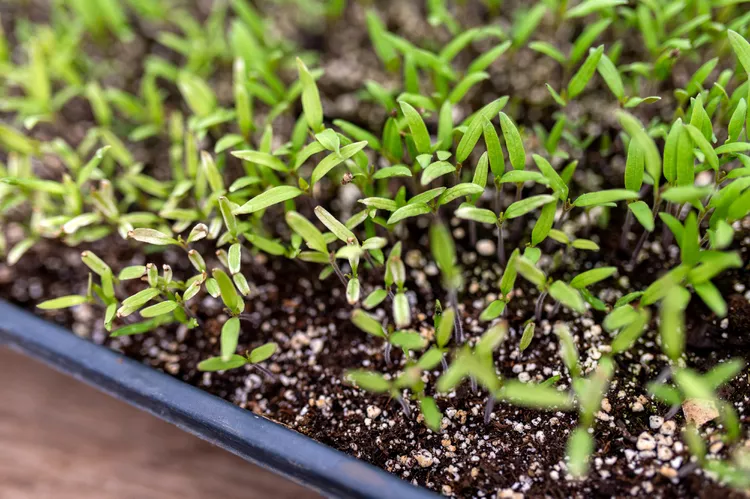
To maximize the growing season, start your black-eyed Susan vine seeds indoors approximately 6 to 8 weeks before the last frost in spring. Plant seeds in individual pots of seed-starting mix and cover them with about 1/2 inch of soil. Keep seeds warm and moist as they germinate and emerge, consistently providing a strong light source. As soon as nighttime temperatures are consistently above 50 degrees Fahrenheit, transplant seedlings outdoors in a spot that receives full sun and has moist, well-drained soil.
If you live in an area with mild spring weather, you can also sow them directly into the soil in early spring. Plant them in well-drained soil about 1/2 inch deep and cover them with a light layer of soil. Place additional plantings approximately 12 to 18 inches apart.
In most climates, nursery-grown plants or transplants can be placed in the ground once evening temperatures are consistently above 50 degrees Fahrenheit. Just make a hole the same size as your plant’s container, gently remove the plant from its container, and place the plant in the ground at the same level in the soil. If you are planting multiple plants, place them about 12 to 18 inches apart.
If you plan to use climbing structures for your black-eyed Susan vines, install those at the same time you sow your seeds or place your plants. This will help reduce stress on the growing plants and germinating seeds.
Black-Eyed Susan Vine Care Tips
Black-eyed Susan vine is easy to grow from seed, but don't panic if your seedlings don't emerge right away; black-eyed Susan seeds often require 21 or more days to germinate. After germination, the plants grow slowly until midsummer, after which they’ll grow quickly—scurrying up a trellis and creating towers of sunny yellow blossoms.
Light
Black-eyed Susan vine needs full sun to thrive and produce flowers. The vine will tolerate partial shade, but flowering may diminish in such areas. If you live in an area with hot, dry summers, place your black-eyed Susan vine in an area where it will be protected from the harshest afternoon rays—like an east-facing garden.
Soil and Water
Black-eyed Susan vine prefers fertile, well-drained soil with a slightly acidic to slightly alkaline pH (6.5 to 7.7). If growing your black-eyed Susan vine in containers, use a high-quality all-purpose potting mix that drains well.
Black-eyed Susan vines do not fare well in soggy soil and may develop rot if overwatered. That said, its tender vines and leaves can wilt when stressed for moisture. Whether your plants are in the ground or in containers, plan to water regularly and deeply (about 1 inch per week) throughout the growing season and consider adding a layer of mulch to help the soil retain a healthy level of moisture.
Temperature and Humidity
Black-eyed Susan vines love warm, tropical climates and are not frost-tolerant. So, they are only perennial in USDA hardiness zones 10 and 11. In other climates, they are typically grown as annuals that get removed at the end of each growing season. In the height of its growing season, black-eyed Susan vine will continue producing blooms until temperatures fall below 60 degrees Fahrenheit (but it may suffer from scorching or wilting in extreme heat).
To that end, black-eyed Susan vine is not drought-tolerant and may grow limp in very arid climates. It is, however, fine with humid conditions.
Fertilizer
Black-eyed Susan vines are prolific bloomers and would likely benefit from the application of a controlled-release fertilizer or complete fertilizer every few weeks throughout the growing season. Follow the label of your chosen product and avoid overfeeding as it may inhibit flowering.
Pruning
You can maintain the shape and size of your black-eyed Susan vine with light pruning, but it is not necessary for the health of the plant. Deadheading is also not required to keep the plant in bloom.
Potting and Repotting
Black-eyed Susan vine is a popular container plant—especially when it is allowed to spill over the sides of hanging baskets and window boxes. Choose a container that is approximately 10 to 12 inches in diameter (for every two to three plants) and fill it with a well-draining potting mix that is slightly acidic to slightly alkaline. If you plan to let your black-eyed Susan vine climb, place a climbing apparatus in or near the container at the time of planting.
Place your container in a sunny spot that is protected from strong winds and harsh afternoon sun. When the plant dies out, remove it from the container and begin again. If you live in a climate where black-eyed Susan vine can be grown as a perennial, you may need to divide and repot your plant every 3 to 4 years. This is best done in early spring before new growth emerges or in the fall after the bulk of blooming has finished.
Pests and Problems
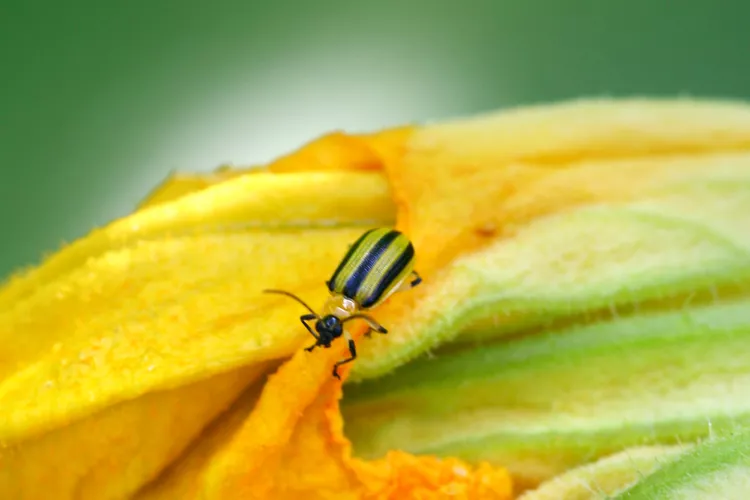
Black-eyed Susan vine is relatively problem-free if planted with proper air circulation, sun, and water. In some locations, it is susceptible to whiteflies, spider mites, and plant scale, but these can be treated with insecticidal soap.
How to Propagate Black-Eyed Susan Vine
It is easy to grow black-Eyed Susan vine from seed, but you can also propagate it from cuttings done in the fall. To do so, take a 4 to 6-inch segment from a healthy stem by snipping it just below the stem node with sterile, sharp pruners. Stick the cut end of the segment into a small pot filled with standard potting mix and place the pot in a sunny spot to grow over the winter months. Keep the soil moist, but not wet and in the spring (when evening temperatures are above 50 degrees Fahrenheit) the plant can be transplanted outside.
Types of Black-Eyed Susan Vine
'Little Susie' black-eyed Susan vine
This sweet vine (Thunbergia alata) bears white flowers with a chocolate-purple center. It climbs to 8 feet tall.
'Orange A-Peel' black-eyed Susan vine
It's not hard to see why 'Orange A-Peel' (Thunbergia alata ) earned its name when you see its bright orange blossoms and dark brown eyes. Like many other black-eyed Susan vines, this cultivar looks great in containers.
Orange Clock Vine
Thunbergia gregorii is distinguished from the closely related black-eyed Susan vine by its rich, pure orange flowers that bear no dark eye. This vine climbs 8-10 feet high with support or will scramble over the ground and become a groundcover. Like black-eyed Susan vine, it is hardy as a perennial in zones 10-11 but is usually grown as an annual.
'Sunny Lemon Star' black-eyed Susan vine
This variety of Thunbergia alata offers big yellow flowers with brown centers and climbs to 8 feet.
'White-Eyed Susie' black-eyed Susan vine
The 'White-Eyed Susie' cultivar (Thunbergia alata) produces a profuse number of bright white blossoms with bold black eyes. You can grow it as a perennial in zones 10-11 or as an annual in zones 2-9.
Black-Eyed Susan Vine Companion Plants
Ageratum
Often referred to as floss flower, ageratum brings playfulness to the garden with tiny pom-pom flowers covered n floss-like filaments. The blooms (which are quite popular with pollinators) begin in late spring and continue to dazzle until the first frost. They prefer full sun to partial shade and are grown as annuals in zones 2-11.
Cosmos
With their soft, fern-like foliage and daisy-like blooms, cosmos make a welcome addition to any wildflower or cottage garden. They are also quite easy to grow, making the unfussy annuals a popular choice for children’s and beginner’s garden plans. Cosmos prefer full sun and well-drained soil but may need staking if they grow too tall to support their flowerheads. Plan to direct sow cosmos seeds in your garden just before the last frost in spring.
Nasturtium
Nasturtium is a fast-growing heirloom annual vine with slightly succulent stems and distinctive, rounded green leaves that resemble miniature lotus leaves. It is easy to grow and perfect for both garden beds and borders that bask in full sunlight. Plan to plant nasturtiums in the spring after the last frost. This cottage favorite is hardy in zones 9-11 but grown as an annual elsewhere.
Zinnia
A classic flower in cottage and cutting gardens, zinnias offer vibrant blooms and require minimal care. Like black-eyed Susan vine, zinnias prefer full sun and moist, well-drained soil. They are considered warm-weather annuals and are at their most robust in the hottest months of spring, summer, and fall. Plan to plant them as the weather warms in the spring.